Advanced driver assistance systems, or ADAS technology, are now common in many new vehicles sold in the U.S. in 2026. These features can help you stay in lane, avoid crashes, and make driving less stressful, but they do not replace an attentive driver. This guide explains what ADAS is, how the main systems work, what to watch for, and how to use them safely. If you are shopping for a car or just want to understand the warning lights and buttons on your dash, this article gives you the clear, practical version.
📖 Table of Contents
- What ADAS Technology Means
- How ADAS Technology Works
- Main ADAS Features Drivers Should Know in 2026
- What ADAS Can Help With — and What It Cannot
- How to Judge ADAS Safety in a Vehicle
- Common ADAS Problems and What Drivers Can Do
- How to Use ADAS Safely Every Day
- FAQ About ADAS Technology
- Conclusion: What Drivers Should Do Next
📌 Key Takeaways
- ADAS technology uses cameras, radar, and sometimes lidar to help with steering, braking, speed control, and blind-spot awareness.
- These systems can reduce risk, but they are driver aids, not self-driving features.
- Features like automatic emergency braking and lane keeping work best when sensors are clean and the vehicle is properly maintained.
- When comparing vehicles, look at how well the ADAS system is tuned, how easy it is to use, and whether it fits your daily driving needs.
What ADAS Technology Means
ADAS stands for advanced driver assistance systems. It is the umbrella term for safety and convenience features that help the driver during normal driving. Common examples include automatic emergency braking, adaptive cruise control, lane departure warning, blind-spot monitoring, and parking assistance.
Think of ADAS technology as a set of digital helpers. The system can warn you, assist you, or briefly intervene, but you remain responsible for the car. That distinction matters because many drivers assume a feature can do more than it really can.
How ADAS differs from self-driving
ADAS is not full automation. It is designed to support the driver, not replace them. A car with lane centering and adaptive cruise can still need constant human supervision, especially in bad weather, construction zones, or heavy traffic.
If a vehicle is marketed with hands-free or automated features, read the limits carefully. In the U.S., driver-assist systems are still regulated as assistance tools, not a reason to stop paying attention.
How ADAS Technology Works
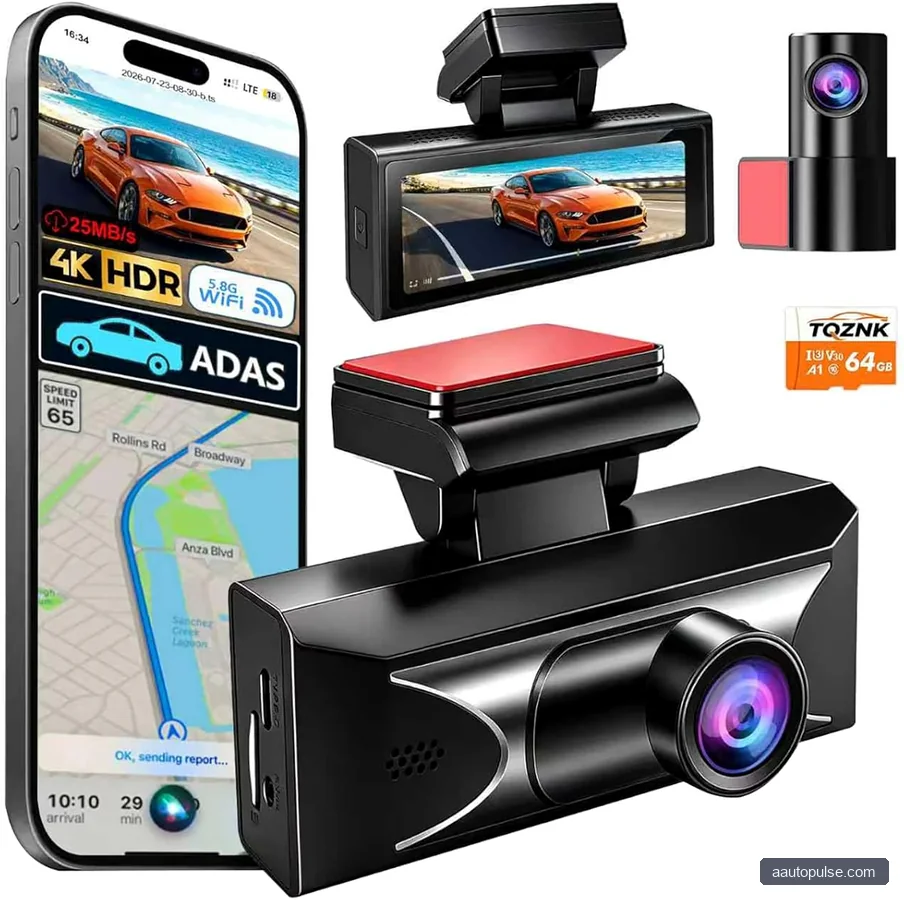
Most ADAS systems use a mix of sensors and software. Cameras can read lane lines, signs, and nearby vehicles. Radar helps measure distance and closing speed. Some higher-end systems may also use lidar or advanced mapping for better object detection.
The computer in the vehicle combines that data and decides whether to warn the driver or take a limited action. That action may be braking, steering correction, throttle reduction, or a vibration in the wheel or seat. The goal is to reduce delay between a hazard and a response.
Why sensor placement matters
These systems depend on a clear view of the road. Dirt, ice, sticker residue, a damaged bumper, or even a misaligned windshield can affect performance. After a windshield replacement or body repair, calibration may be needed so the system reads the road correctly.
This is one reason owners should not ignore dash warnings related to cameras, radar, or driver assistance. A small issue can disable important safety functions.
Main ADAS Features Drivers Should Know in 2026
Not every car has the same package, but these are the most common features you will see on U.S. roads.
Automatic emergency braking
This system can detect a likely collision and apply the brakes if you do not react in time. It is most useful in stop-and-go traffic and sudden slowdowns. It is not a substitute for safe following distance.
Lane departure warning and lane keeping assist
Lane departure warning alerts you if the car drifts out of its lane. Lane keeping assist goes one step further and may help steer the vehicle back. These systems work best on clear highway markings and can struggle with faded paint or snow-covered roads.
Adaptive cruise control
Adaptive cruise control maintains a chosen speed and can slow down or speed up to keep a set gap from the vehicle ahead. It can reduce fatigue on long drives, but it can also lull drivers into paying less attention than they should.
Blind-spot monitoring and rear cross-traffic alert
Blind-spot monitoring warns you when a vehicle is beside you in another lane. Rear cross-traffic alert is helpful when backing out of a parking space and a vehicle or pedestrian approaches from the side. These are especially useful in crowded parking lots and multi-lane commuting.
Driver monitoring systems
Some newer vehicles now use infrared cameras or attention-tracking software to check whether the driver is looking ahead. If the system thinks you are distracted, it may issue alerts or limit some hands-free functions. This is meant to improve safety, not to be annoying for its own sake.
What ADAS Can Help With — and What It Cannot
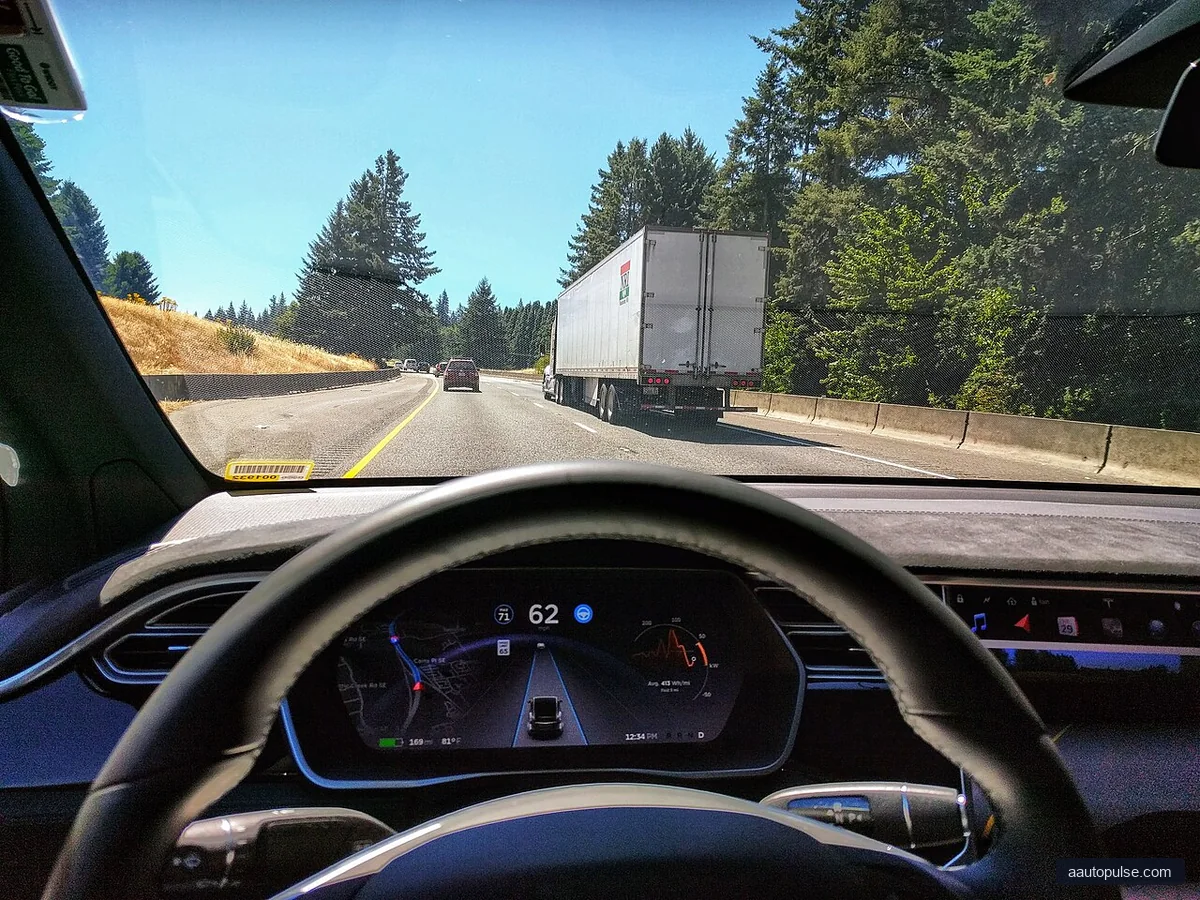
ADAS technology can lower workload and help prevent common crashes, but its limits are just as important as its strengths. It performs best in predictable conditions, such as clear roads, visible lane markings, and normal traffic flow.
It can struggle when the environment becomes messy. Heavy rain, fog, snow, sun glare, broken lane lines, dirty sensors, and complex construction areas can all confuse the system. In those cases, the driver must take over immediately.
| ADAS Feature | What It Helps With | Common Limitation |
|---|---|---|
| Automatic emergency braking | Rear-end crash avoidance | May not detect every object in poor weather or complex scenes |
| Lane keeping assist | Drift correction on highways | Can struggle with faded lines or sharp curves |
| Adaptive cruise control | Comfort and spacing in traffic | May brake too late or too early in some situations |
| Blind-spot monitoring | Lane-change awareness | Can miss fast-approaching vehicles if relied on alone |
How to Judge ADAS Safety in a Vehicle
When comparing vehicles, it helps to look beyond the feature list. A long list of tech is not automatically better if the system is hard to use or overly sensitive. What matters is whether the system supports real-world driving in a calm, predictable way.
For safety, also check how the vehicle performs in recognized crash testing. In the U.S., that means looking at NHTSA 5-star ratings and IIHS crashworthiness categories. These scores do not measure every ADAS feature directly, but they help show how the vehicle performs in collisions and safety evaluations.
Selection criteria that matter most
- Ease of use: Are the buttons, alerts, and menus simple to understand?
- System behavior: Does the car brake, steer, or warn in a smooth, natural way?
- Sensor coverage: Does the vehicle include camera, radar, and blind-spot support where you need it?
- Crash test results: Check NHTSA and IIHS results before you buy.
- Maintenance needs: Ask how windshield replacement, alignment, or bumper repair affects calibration.
Who should choose what
Daily commuters: Adaptive cruise control and lane keeping can reduce fatigue on highways and in traffic.
Urban drivers: Automatic emergency braking, blind-spot monitoring, and rear cross-traffic alert are especially useful in dense traffic and parking lots.
Long-distance travelers: A well-tuned driver assistance package can make long drives more comfortable, but it should still be easy to override.
Budget-focused buyers: Choose the strongest core safety systems first, then add convenience features only if they fit your routine.
Common ADAS Problems and What Drivers Can Do
Most ADAS issues are not dramatic. They often show up as alerts, reduced function, or a system that seems less smooth than usual. A dirty sensor or a simple calibration issue can cause many of these complaints.
If a feature is not working right, start with the basics. Clean the windshield, check for snow or mud on the bumper, and confirm there are no warning messages on the dash. If the issue continues, the car may need a scan, software check, or calibration by a qualified shop or dealer.
| Symptom | Possible Cause | What to Check First |
|---|---|---|
| Lane assist warning is off | Dirty camera or faded lane markings | Clean windshield area and inspect road markings |
| Adaptive cruise behaves erratically | Radar blockage or sensor misalignment | Check bumper area for dirt, ice, or damage |
| Blind-spot alert stays on | Nearby object, trailer, or sensor issue | Remove obstructions and verify the warning clears |
| Dash shows driver-assist unavailable | Weather, system fault, or calibration need | Restart vehicle and inspect for service alerts |
How to Use ADAS Safely Every Day
The safest way to use ADAS technology is to treat it as a backup, not a substitute for judgment. The driver should always stay ready to brake, steer, and respond. That is especially true in rain, snow, or areas with poor lane markings.
- Learn each feature before you need it in traffic.
- Read the owner’s manual for limits, warnings, and reset steps.
- Keep cameras, radar zones, and windshields clean.
- Pay attention to dash messages and alert tones.
- Take over quickly if the system behaves unexpectedly.
A good habit is to test the system in a calm setting first, such as an empty parking lot or a quiet road, if your vehicle manual allows it. That way, you understand the alert timing and how firmly the car may intervene.
FAQ About ADAS Technology
Is ADAS the same as autonomous driving?
No. ADAS supports the driver, while autonomous driving would mean the vehicle handles driving tasks on its own. Most cars sold in the U.S. in 2026 still require active human supervision at all times.
Do ADAS features work in bad weather?
Sometimes, but not always well. Rain, snow, fog, ice, and glare can reduce sensor performance. If conditions are poor, assume the system may be limited and drive more cautiously.
Does every car need calibration after windshield or body repair?
Not every repair, but many vehicles do need some form of camera or radar calibration after work that affects sensor alignment. Always verify the procedure for your specific vehicle in the service information or owner’s manual.
Can ADAS lower accident risk?
It can help reduce certain common crash types, especially rear-end and lane-departure events. Still, no safety system can prevent every crash, so attentive driving remains essential.
What should I check when comparing ADAS-equipped cars?
Look at feature quality, not just feature count. Also compare NHTSA 5-star ratings, IIHS crashworthiness results, ease of use, and how well the system fits your daily routes.
Conclusion: What Drivers Should Do Next
ADAS technology can make driving safer and less tiring, but only when you understand what it can and cannot do. Before you buy or rely on these features, check the system’s limits, review crash test results, and learn how to keep sensors clean and calibrated. If your current vehicle already has these features, spend a few minutes with the owner’s manual so you know how to use them well and when to take control yourself.