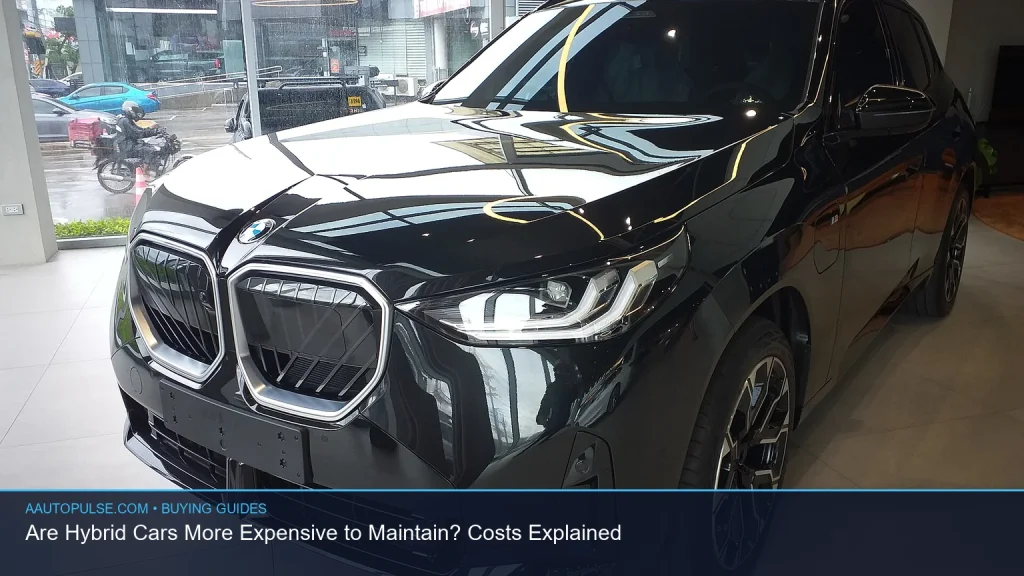
Wondering are hybrid cars more expensive to maintain? The short answer is: usually not by much, and in some cases, hybrids can cost less to maintain than gas-only cars. Hybrids do have a few unique parts, like the battery and electric drive system, but they also reduce wear on brakes and sometimes on the engine. For most US drivers, the real question is not just maintenance cost alone. It is whether the fuel savings and lower brake wear offset any added repair risk over time.
📖 Table of Contents
📌 Key Takeaways
- Hybrid maintenance is often similar to, and sometimes lower than, a gas car’s routine upkeep.
- The biggest hybrid-specific cost concern is the high-voltage battery, but failures are not common in the early life of most hybrids.
- Hybrids often need less brake work because regenerative braking reduces pad and rotor wear.
- Whether a hybrid is worth it depends on your driving pattern, fuel savings, and how long you plan to keep the vehicle.
How Hybrid Maintenance Compares to Gas Cars
For routine service, hybrids are often close to a traditional car in cost. Oil changes, cabin filters, tire rotations, coolant service, and brake fluid checks still matter. The difference is that hybrids use their gas engine less often in low-speed driving, which can reduce engine wear in some conditions.
At the same time, hybrids add an electric motor, battery pack, power electronics, and high-voltage wiring. Those parts do not usually need frequent service, but they can raise repair complexity if something goes wrong. That is why the answer to are hybrid cars more expensive to maintain is usually “not for routine upkeep, but possibly for some repairs.”
Typical maintenance items to expect
Most hybrid owners still follow standard maintenance schedules. That usually includes engine oil changes, air filters, tire rotations, brake inspections, spark plugs, coolant service, and transmission or e-CVT fluid checks where recommended. The exact mileage intervals vary by brand and model, so always verify the owner’s manual.
Many hybrids use a 0W-16, 0W-20, or similar low-viscosity oil, and some engines hold roughly 4 to 5 quarts, though capacity varies. Some models also have inverter coolant and battery cooling system checks. These items are not universal, so service intervals should be confirmed for your specific vehicle.
Where Hybrid Owners Can Save Money

One major benefit of hybrid cars is reduced fuel use. That is not maintenance, but it affects the total cost of ownership, which is what many shoppers care about most. Another advantage is lower brake wear because the motor helps slow the car through regenerative braking.
In city driving, hybrids often shine because stop-and-go traffic lets the electric motor do more of the work. That can mean less engine strain and fewer brake replacements over time. For many drivers, these savings help balance out any extra complexity in the system.
Benefits of hybrid cars that affect upkeep
- Less brake wear: Regenerative braking can extend pad life.
- Lower engine use in traffic: The gas engine may shut off at idle and low speeds.
- Fewer cold-start cycles: Some driving patterns reduce wear from frequent engine restarts.
- Good efficiency for commuters: Lower fuel use can reduce overall operating costs.
These advantages of hybrid cars do not mean zero repairs. They simply shift some costs from fuel and wear items into more specialized components. For many buyers, that tradeoff is still a win.
Hybrid Parts That Can Cost More to Repair
Hybrids are not usually expensive because of everyday maintenance. They can become costly when a major component fails. The most talked-about item is the traction battery, but other parts can also add cost, such as the inverter, DC-DC converter, electric water pumps, or hybrid cooling components.
That does not mean these parts fail often. It means repairs may require more skill, more diagnostic time, and a technician trained to work on high-voltage systems. Labor rates can also be higher at some shops, especially if the vehicle needs dealer-level tools or software.
Common hybrid repair concerns to watch for
- Warning lights for the hybrid system or check engine light
- Reduced fuel economy compared with normal driving patterns
- Battery fan running loudly or more often than usual
- Rough transitions between electric and gas power
- Weak acceleration or limp mode
If you notice those symptoms, do not assume the battery is bad right away. A weak 12-volt battery, a sensor fault, or a cooling problem can mimic a larger hybrid issue. Proper diagnosis matters before replacing expensive parts.
Pros and Cons of Hybrid Cars: What Buyers Should Weigh

If you are asking is a hybrid worth it or is a hybrid car worth it, it helps to look at the full picture. The answer depends on your commute, how long you keep the car, and whether you care more about fuel savings or simpler mechanics. A hybrid is often a smart pick for daily drivers who face traffic and rack up regular miles.
| Category | Hybrid | Gas-only car |
|---|---|---|
| Routine maintenance | Usually similar, sometimes slightly lower for brakes | Standard routine service, often more brake wear |
| Fuel cost | Usually lower | Usually higher |
| Complex repairs | Can be more expensive | Usually simpler |
| Brakes | Often last longer | Typically wear faster |
| Long-term ownership | Can be very good for high-mileage drivers | Can be easier to predict for repair budgeting |
Strengths and limitations
Strengths of hybrids: better fuel economy, less brake wear, and strong value for city and commuter driving. They also tend to make sense for drivers who want lower fuel spending without moving to a full EV.
Limitations of hybrids: more complex systems, potential battery-related repairs, and fewer independent shops with deep hybrid experience in some areas. That complexity can raise repair bills when something major fails.
Who should choose what
- Choose a hybrid if you drive a lot in traffic, want better mpg, and plan to keep the car long enough to benefit from fuel savings.
- Choose gas-only if you want the simplest powertrain and plan to buy used at a lower entry price.
- Choose hybrid if you are comfortable following the maintenance schedule closely and verifying the car’s service history.
What Maintenance Costs Look Like Over Time
Hybrid maintenance is best understood by ownership stage. Early on, costs can look very normal. As mileage rises, wear items still show up, but the big question becomes whether the battery and supporting electronics stay healthy.
Below is a practical guide to what many owners should expect, though exact intervals and services vary by model. Always check the owner’s manual and recall or service bulletins for your vehicle.
| Mileage range | Common maintenance focus | What to check |
|---|---|---|
| 0 to 30,000 miles | Routine service | Oil, filters, tire rotation, brake inspection, coolant level checks |
| 30,000 to 60,000 miles | Wear items and fluids | Cabin and engine air filters, spark plugs on some models, brake fluid, inverter coolant where required |
| 60,000 to 100,000 miles | Deeper inspection | Hybrid battery cooling system, accessory battery health, suspension, tires, transmission fluid if specified |
| 100,000+ miles | Long-term reliability review | Battery performance, wiring, cooling fans, mounts, and major wear components |
If you are comparing ownership costs, ask for a full maintenance history on a used hybrid. A clean service record matters more than the badge on the trunk. Skipped fluid changes, warning lights, or weak cooling systems can turn a good deal into an expensive one.
How to Decide If a Hybrid Is Worth It
Many shoppers ask are hybrids worth it because they want a simple yes or no. The better answer is that hybrids are worth it for the right driver. If your commute includes heavy traffic, short trips, or lots of stop-and-go movement, the efficiency benefits can be strong.
On the other hand, if you drive very little each year or mostly take long highway trips, the extra purchase price and added system complexity may be harder to justify. In that case, a gas car can be easier to own and still fit your needs.
A simple decision checklist
- Estimate your annual miles and driving mix: city, highway, or both.
- Check the hybrid’s service schedule and confirm the manual’s maintenance intervals.
- Review the car’s warranty coverage, especially for hybrid components.
- Look at the seller’s maintenance records if buying used.
- Compare fuel savings against possible repair complexity over the time you plan to own the car.
This is the clearest way to judge the advantage and disadvantage of hybrid car ownership. The advantage is lower fuel use and often lower brake wear. The disadvantage is a more complex system that can cost more to diagnose or repair if a major part fails.
FAQ
Are hybrid cars more expensive to maintain than regular cars?
Usually, routine maintenance is about the same, and hybrids may even save money on brakes. The difference shows up more in certain repairs, since hybrid systems are more complex. So the answer is usually “not for routine service, but sometimes for major repairs.”
Do hybrid batteries need regular replacement?
Not as part of normal scheduled maintenance. Most owners never replace the traction battery early in the vehicle’s life, but battery health can decline with age and mileage. If you are buying used, check the battery warranty status and service history.
What are the main pros and cons of hybrid cars?
The main pros are better fuel economy, lower brake wear, and strong value for commuters. The main cons are more complex repairs and possible battery-related costs later on. Those are the core pros and cons of hybrid cars most buyers should weigh.
Is a hybrid car worth it for highway drivers?
It can be, but the value is often lower than for city drivers. Hybrids usually deliver their biggest fuel savings in stop-and-go traffic. If most of your miles are steady highway driving, the savings may be smaller.
What should I check before buying a used hybrid?
Ask for maintenance records, scan for warning lights, review tire and brake wear, and confirm all hybrid-specific service was completed on time. If possible, get a pre-purchase inspection from a shop familiar with hybrids. That is often the best way to avoid surprise repair costs.
Conclusion
So, are hybrid cars more expensive to maintain? Not usually for regular upkeep. The bigger issue is that when hybrids do need major repairs, those jobs can be more specialized and sometimes costlier than on a standard gas car.
For many US drivers, hybrids are still a smart choice because they save fuel and can reduce brake wear. Before you buy, compare the service schedule, check the warranty, and think about how long you plan to keep the car. That will tell you whether a hybrid is truly worth it for your driving needs.
Featured image: Photo: Captainmorlypogi1959 / CC BY-SA 4.0 via Wikimedia Commons