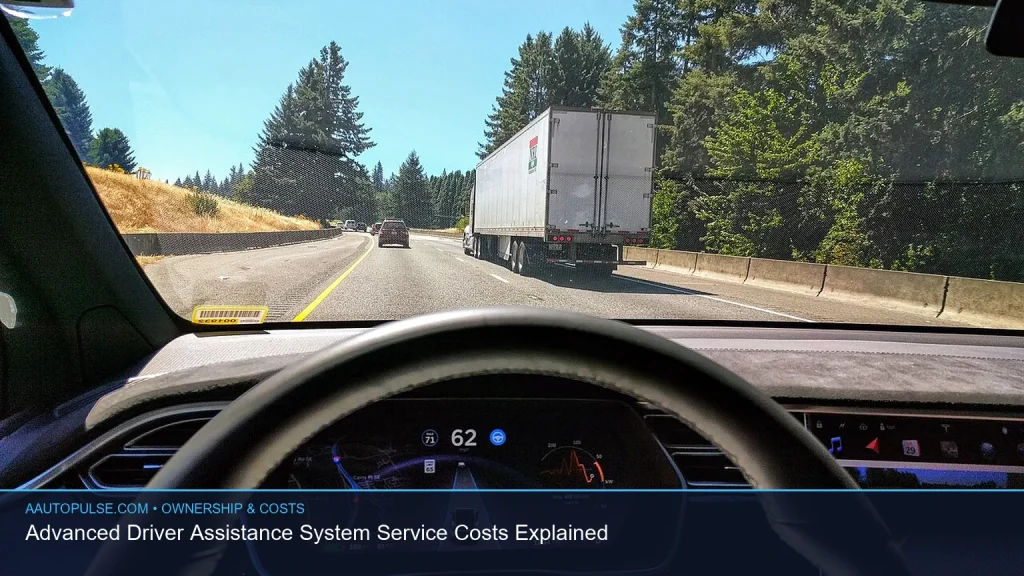
Advanced driver assistance system service can be confusing because these features are tied to cameras, radar, ultrasonic sensors, and software that must all work together. The short answer is that service costs vary widely based on the repair, the vehicle, and whether calibration is needed after a windshield, bumper, suspension, or alignment job. If your car has lane keeping, adaptive cruise control, blind-spot monitoring, or automatic emergency braking, routine maintenance may be simple, but diagnostics and calibration can add real cost. Here’s what affects pricing, when service is needed, and how to avoid paying for the wrong repair.
📖 Table of Contents
- What Advanced Driver Assistance System Service Includes
- Why Service Costs Vary So Much
- Common Signs Your ADAS Needs Service
- Advanced Driver Assistance System Service Cost Factors to Know
- When Calibration Is Required After Repairs
- How to Reduce Costs Without Cutting Corners
- ADAS, Safety Ratings, and Why Proper Service Matters
- FAQ: Advanced Driver Assistance System Service Costs
- Conclusion: What to Do Next
📌 Key Takeaways
- Advanced driver assistance system service often includes diagnostics, sensor checks, and calibration, not just part replacement.
- Costs rise fast after windshield replacement, collision repair, suspension work, or wheel alignment because many ADAS features need recalibration.
- Warning lights, false alerts, and missing safety features are signs your system may need inspection right away.
- Always verify the repair plan against your owner’s manual and ask whether calibration is required before driving.
What Advanced Driver Assistance System Service Includes
Advanced driver assistance systems, or ADAS, use sensors and software to help with braking, steering, parking, and lane awareness. Common features include adaptive cruise control, lane departure warning, blind-spot monitoring, parking assist, and forward collision warning. When one of these systems acts up, service may involve scanning for fault codes, checking sensor aim, cleaning or replacing components, and performing a calibration.
Unlike many basic repairs, ADAS service is often tied to other work on the vehicle. A windshield replacement can affect a camera mounted near the rearview mirror. A bumper repair can affect radar sensors, and a suspension or alignment job can change sensor angles enough to require recalibration.
Typical service tasks
- Diagnostic scan of ADAS-related fault codes
- Camera, radar, and ultrasonic sensor inspection
- Cleaning lens covers and sensor housings
- Static or dynamic calibration after repair
- Software updates or module relearns when supported
Why Service Costs Vary So Much
The cost of advanced driver assistance system service depends on what failed, what was repaired, and what the vehicle requires to restore proper function. A simple sensor cleaning may be low cost, while a full calibration after body work can take more time and special equipment. Some vehicles need both a static calibration in a shop and a dynamic road test to verify the system.
Labor often matters as much as parts. If a shop must set up calibration targets, level the vehicle, confirm tire pressure, and follow a precise procedure, the bill can rise quickly. Luxury and newer vehicles may also require dealer-level software access or brand-specific tools.
Main cost drivers
- Type of repair: windshield, bumper, suspension, steering, or collision work
- Number of systems involved: camera, radar, sonar, and steering sensors
- Need for static, dynamic, or dual calibration
- Vehicle make, model, and software requirements
- Shop equipment and labor time
Common Signs Your ADAS Needs Service
Some ADAS problems are obvious. Others are subtle and show up as false alerts or features that stop working without a clear reason. If the vehicle was recently in a crash, had a windshield replaced, or had suspension work, a system check is a smart next step even if the dash is quiet.
Many drivers first notice a warning light, a message in the instrument cluster, or a feature that behaves oddly. For example, lane keeping may drift, the car may brake too early, or blind-spot alerts may trigger when nothing is there. These are all reasons to inspect the system before relying on it.
Quick symptom checklist
- ADAS warning light or message on the dash
- Adaptive cruise control will not engage
- Lane keeping or lane departure alerts are inconsistent
- False braking or sudden collision warnings
- Blind-spot monitoring errors after body or bumper repair
- Camera view is blocked, distorted, or out of line
Advanced Driver Assistance System Service Cost Factors to Know

Because no product list or vehicle-specific price data was supplied, the safest answer is this: advanced driver assistance system service can range from a basic diagnostic visit to a much larger repair and calibration job. Exact pricing should be checked with the repair facility and confirmed against your vehicle’s service information. Your owner’s manual is the best starting point for what your car requires.
As a rule, the more the repair changes the vehicle’s shape, height, alignment, or glass, the more likely calibration will be needed. Even a small change in sensor position can affect how the system “sees” the road. That is why a repair estimate should clearly separate diagnosis, parts, labor, and calibration.
| Service Type | What It Usually Includes | Why Cost Can Rise | Best For |
|---|---|---|---|
| Basic diagnostic scan | Fault code check, symptom review, visual inspection | May uncover deeper sensor or wiring issues | Dash warnings, feature failures |
| Camera or radar calibration | Static setup or road-based relearn | Special tools, time, and exact setup needed | After windshield, bumper, or alignment work |
| Sensor replacement | New camera, radar, or ultrasonic sensor | Parts plus calibration and coding | Broken or damaged sensors |
| Post-collision verification | System checks after body repair | May involve multiple systems at once | Accident repair and insurance work |
Selection criteria: what to ask before approving work
- Does the estimate include calibration, or only diagnosis?
- Will the repair require a static, dynamic, or dual calibration?
- Is the shop equipped for my vehicle’s make and model?
- Will the vehicle need a post-repair road test or alignment check?
- Is software programming or coding part of the job?
When Calibration Is Required After Repairs
Calibration is one of the most important parts of advanced driver assistance system service. It helps the system understand where the road, lane lines, and nearby vehicles are after repairs or changes to the vehicle. If the sensor angle is off, the system may miss hazards or trigger false warnings.
Calibration is often needed after windshield replacement, front-end collision repair, bumper removal, steering component work, suspension repairs, or wheel alignment. Some vehicles also need calibration after tire size changes or ride height changes, but this depends on the model. Check the owner’s manual and service information before assuming the system will “self-correct.”
Ordered steps for a smart repair check
- Identify the affected feature, such as lane keeping or adaptive cruise control.
- Check for warning lights, messages, or recent repair history.
- Ask the shop to scan for codes before replacing parts.
- Confirm whether calibration is required after the repair.
- Verify the system works under the conditions listed in the owner’s manual.
- Keep records of the repair, calibration, and any road-test notes.
How to Reduce Costs Without Cutting Corners
The cheapest repair is not always the smartest one if it leaves the system out of alignment. Still, there are ways to manage cost and avoid unnecessary work. The key is to separate true ADAS faults from simple issues like a dirty lens, low battery voltage, damaged wiring, or an unapproved aftermarket part.
Start with a scan and a visual inspection before replacing expensive modules. Ask for a written estimate that shows diagnosis, labor, parts, and calibration as separate lines. If the repair follows an insurance claim, make sure the estimate reflects the full restoration of the safety system, not just the visible body damage.
Cautions to keep in mind
- Do not assume a warning light means a failed sensor.
- Do not skip calibration after body or glass work.
- Do not use aftermarket parts that are not approved for your vehicle without checking fit and function.
- Do not rely on driver assistance features until the repair is confirmed complete.
ADAS, Safety Ratings, and Why Proper Service Matters
Driver assistance features are meant to support safe driving, but they only work as designed when the system is functioning correctly. For shoppers comparing vehicles, safety data from sources like NHTSA 5-star ratings and IIHS crashworthiness categories can help show how a vehicle performs in testing. Those ratings are useful, but they do not replace proper maintenance or correct post-repair calibration.
That matters because even a highly rated vehicle can lose some real-world benefit if a camera or radar unit is misaligned. In other words, safety tech is only as good as its setup. If a repair affects the system, service should restore it to the correct operating state before you depend on it again.
FAQ: Advanced Driver Assistance System Service Costs
How do I know if my car needs ADAS calibration after a repair?
If the repair involved the windshield, bumper, suspension, steering, alignment, or a crash, calibration is often required. The exact rule depends on the vehicle, so check the owner’s manual and ask the shop to confirm before the car is returned.
Can I drive if an ADAS warning light is on?
Sometimes the vehicle will still drive normally, but the affected feature may be disabled or unreliable. Treat the warning as a sign to inspect the system soon, especially if it affects braking, steering, or lane support.
Is a sensor replacement always needed when ADAS fails?
No. Many problems come from wiring, alignment, blocked sensors, low battery voltage, software issues, or a calibration error. A proper diagnostic scan should come before parts replacement.
Why does windshield replacement affect ADAS?
Many cars mount a front camera near the windshield. If the glass is replaced, the camera may need recalibration so it can correctly read lane lines, signs, and traffic conditions.
Can a regular alignment shop handle ADAS service?
Some can, but not all have the tools or software to complete the job correctly. Ask whether the shop performs the exact calibration your vehicle needs, not just a wheel alignment.
Conclusion: What to Do Next
Advanced driver assistance system service is more than a quick scan. The real cost depends on diagnosis, repair type, and whether calibration is needed to restore proper operation. Before approving work, confirm what failed, what was changed, and whether the shop will verify the system after repair.
Your best next step is to check the owner’s manual, note any warning messages, and get a written estimate that separates diagnosis, repair, and calibration. That simple process can help you avoid surprises and keep the safety features you rely on working the way they should.