If you’re shopping for the cheapest car batteries, the goal is not just the lowest sticker price. You want a battery that starts reliably, fits your vehicle, and lasts long enough to save money over time. The best budget pick is usually the one that balances cost, warranty, reserve capacity, and cold-cranking power for your climate. This guide shows how to compare low-cost options, what features matter most, and how to avoid buying a cheap battery that fails early.
📖 Table of Contents
- What “Cheapest” Should Mean When Buying a Car Battery
- Cheapest Car Batteries: Best Value Factors to Compare
- Who Should Choose the Cheapest Option, and Who Should Not
- How to Spot a Cheap Battery That Is Still a Good Value
- Common Trade-Offs in the Budget Battery Category
- Simple Battery Care to Make a Budget Pick Last Longer
- FAQ: Cheapest Car Batteries in the US
- Final Verdict: Who Should Choose What
📌 Key Takeaways
- The cheapest battery is not always the best value; match the battery to your vehicle’s size, climate, and electrical needs.
- Check group size, terminal layout, and cold-cranking amps before price shopping.
- Budget batteries often trade lower price for shorter warranties or lower reserve capacity.
- Always verify the fit and specs in your owner’s manual before buying.
What “Cheapest” Should Mean When Buying a Car Battery
A low price only helps if the battery actually works for your car. A bargain battery that is the wrong size, weak in cold weather, or poorly matched to stop-start systems can become expensive fast. For US drivers, the smartest budget choice is usually the lowest-cost battery that still meets the vehicle’s required specs.
When you compare options, focus on the basics first: group size, terminal location, cold-cranking amps, reserve capacity, and battery type. If your car uses AGM or an enhanced flooded battery, do not switch to a cheaper standard flooded model unless your manual says it is allowed.
Start with your owner’s manual
Your manual is the first place to check for battery group size and required performance. It may also note whether your vehicle needs AGM technology, special venting, or specific reserve capacity. If the battery choice is unclear, a dealer parts department or trusted auto parts store can help confirm fitment.
In many cases, a battery that fits the correct group size and meets the minimum required specs will be the most practical budget choice. That is especially true if you drive a standard commuter car and do not need premium features.
Cheapest Car Batteries: Best Value Factors to Compare
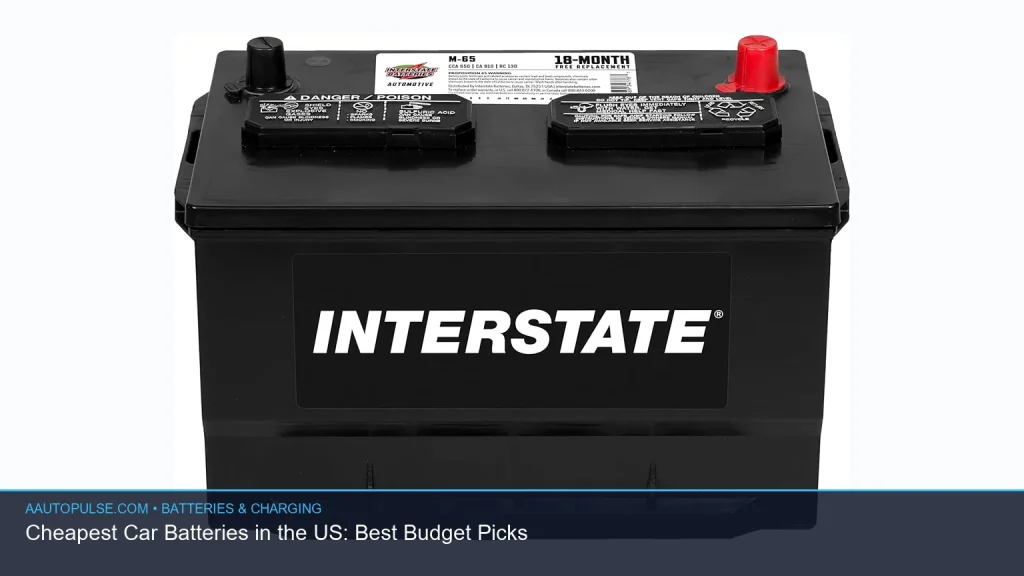
Because product listings were not provided, it is safer to compare by category rather than by brand. Budget batteries generally fall into a few common buckets, and each one suits a different type of driver. The table below can help you narrow the field.
| Battery Type | Best For | Strengths | Limitations |
|---|---|---|---|
| Standard flooded lead-acid | Older vehicles and basic daily drivers | Usually lowest upfront cost | May have shorter life and lower performance in harsh conditions |
| AGM | Vehicles with start-stop systems, higher electrical loads, or premium accessories | Better vibration resistance and strong electrical performance | Usually costs more than basic flooded batteries |
| Enhanced flooded battery | Some vehicles with moderate electrical demand | Often a middle ground between cost and durability | Not suitable for every application |
The cheapest car batteries are often standard flooded models, but that does not make them right for every vehicle. If your car requires AGM, choosing a cheaper flooded battery may cause charging issues, reduced lifespan, or warning lights.
Selection criteria that matter most
- Group size: Must match the battery tray and hold-down.
- Cold-cranking amps: Important for starting power in cold weather.
- Reserve capacity: Helps keep accessories running if the charging system has a problem.
- Warranty: A longer warranty can improve value even if the sticker price is slightly higher.
- Build type: AGM is often worth the extra cost for demanding vehicles.
Who Should Choose the Cheapest Option, and Who Should Not
Not every driver should chase the lowest price. A simple commuter car in a mild climate is usually a better match for a budget battery than a truck with lots of accessories or a modern vehicle with start-stop technology. The right choice depends on how hard your electrical system works each day.
If you mostly drive short distances, make frequent stops, or live in a very hot or cold region, a slightly better battery may be the smarter buy. That is because extreme temperatures and repeated short trips can shorten battery life.
| Driver Type | Best Budget Choice | Why |
|---|---|---|
| Older sedan with basic electronics | Standard flooded battery | Lowest cost and usually sufficient |
| Vehicle with start-stop | AGM or vehicle-specified equivalent | Built for frequent cycling |
| Cold-weather commuter | Budget battery with strong CCA rating | Better winter starting performance |
| Truck or SUV with accessories | Higher-capacity AGM or upper-tier flooded battery | Handles higher load more reliably |
How to Spot a Cheap Battery That Is Still a Good Value
A low-cost battery can still be a smart purchase if it passes a few basic checks. The goal is to avoid hidden trade-offs that show up later, like poor cold starts or early failure. A little comparison shopping can save you from replacing the battery again too soon.
Look for clear labeling, recent stock, and a warranty that is easy to understand. Batteries sitting too long on the shelf can lose charge, so newer inventory is usually better.
Use this quick buying checklist
- Confirm the group size and terminal layout.
- Check that the battery meets or exceeds your vehicle’s minimum CCA requirement.
- Make sure the battery type matches your vehicle needs, especially for AGM applications.
- Review the warranty terms, including free replacement period.
- Ask about installation, core return, and recycling fees before checkout.
If you are buying in person, ask whether the battery has been charged and load-tested. If you are buying online, verify the return policy in case the battery arrives damaged or does not fit your vehicle.
Common Trade-Offs in the Budget Battery Category
The cheapest car batteries often reduce one or more of the following: reserve capacity, warranty length, vibration resistance, or cold-weather strength. That does not mean they are bad. It means they are designed for simpler needs and lighter use.
Knowing the trade-offs helps you avoid overbuying. It also helps you decide when spending a bit more is worth it.
- Lower upfront cost: Good for older cars or temporary use.
- Shorter warranty: May mean more risk if the battery fails early.
- Less reserve capacity: Can matter if you leave lights or accessories on.
- Lower performance margin: Might be fine in mild weather, but not ideal in extreme heat or cold.
For many drivers, the best budget battery is the one that is inexpensive but still comes from a reliable retail channel with easy exchange support. That is often more important than chasing the absolute lowest price tag.
Simple Battery Care to Make a Budget Pick Last Longer
Even a low-cost battery can last longer with basic care. Clean terminals, tight connections, and regular charging help reduce premature failure. If your driving pattern is mostly short trips, occasional longer drives can help the battery recharge more fully.
Most drivers should also check for parasitic drains if a battery keeps dying early. Common signs include dim lights, slow cranking, dashboard warnings, and a battery that goes flat after the car sits for a few days.
Maintenance habits that help
- Keep terminals clean and free of corrosion.
- Make sure the battery is secured in the tray.
- Drive long enough for the alternator to recharge the battery after starting.
- Use a battery maintainer if the car sits for long periods.
- Have the charging system checked if the battery keeps dying.
For most passenger vehicles, there is no universal mileage interval for battery replacement. Many batteries last several years, but lifespan depends heavily on climate, driving habits, and electrical load. Verify replacement timing in your owner’s manual and watch for symptoms instead of relying on a fixed number alone.
FAQ: Cheapest Car Batteries in the US
Are the cheapest car batteries worth buying?
They can be, if they match your vehicle’s required specs and come from a seller with a solid warranty and return policy. Cheap is fine when the battery is suitable for the job. Cheap is not fine when it is under-spec for your car.
Should I choose AGM if I want the lowest price?
Usually not, because AGM batteries typically cost more than standard flooded batteries. Only choose AGM if your vehicle requires it or if your driving conditions justify the added cost. The owner’s manual should guide this decision.
How do I know what battery size my car needs?
Check the owner’s manual, the battery label in your current vehicle, or a trusted fitment guide from a parts store. Make sure the group size, terminal placement, and hold-down style match. If any detail is off, the battery may not fit securely.
Is a longer warranty always better?
Not always, but it is often a sign of better value. Read the terms closely, because some warranties have limited free replacement coverage and later pro-rated coverage. A slightly cheaper battery with a weak warranty may cost more in the long run.
Can a budget battery work in cold weather?
Yes, if it has enough cold-cranking amps for your vehicle and climate. For winter use, compare the CCA rating and do not buy a battery that barely meets the minimum. In colder states, a little extra starting power can make a big difference.
Final Verdict: Who Should Choose What
If your vehicle uses a standard flooded battery and you drive in normal conditions, the cheapest car batteries can be a smart buy. If your car requires AGM, has start-stop technology, or carries a heavier electrical load, spend a bit more for the correct type. The best value is the battery that meets your car’s needs, starts reliably, and gives you a fair warranty.
Next step: check your owner’s manual, confirm your battery group size and specs, then compare budget options from reputable sellers. That simple process will help you buy the lowest-cost battery that still makes sense for your car.