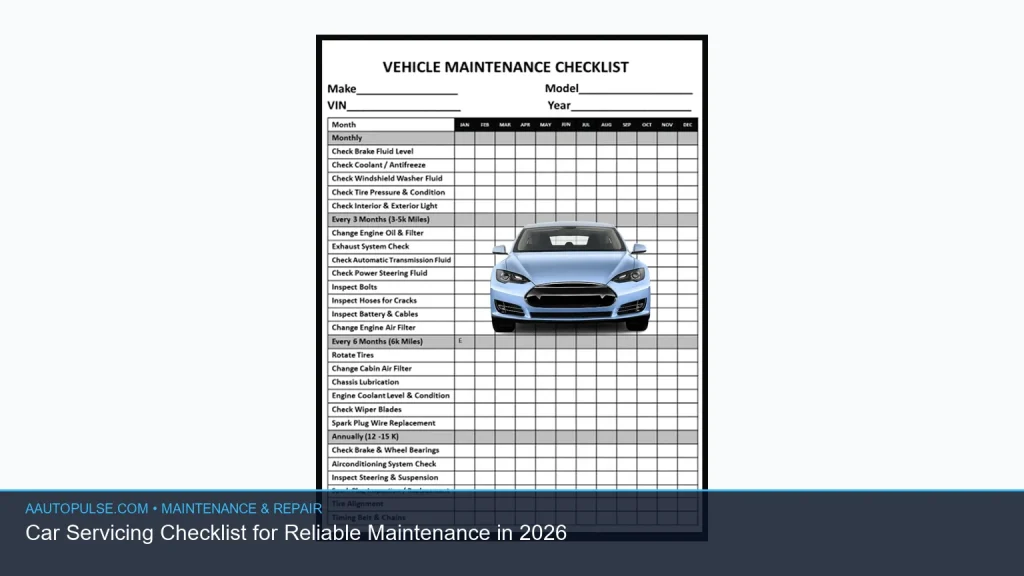
If you want fewer surprise repairs and a car that feels dependable all year, a clear car servicing checklist is the best place to start. The right routine covers oil, tires, brakes, fluids, filters, battery health, and a few safety checks that are easy to forget. This guide shows what to inspect, when to do it, and how to keep a simple service record so nothing slips through the cracks. It is built for US drivers in 2026, with practical intervals and reminders to confirm details in your owner’s manual.
📖 Table of Contents
📌 Key Takeaways
- A strong car servicing checklist helps you catch wear early, lower repair risk, and extend vehicle life.
- Most routine checks center on oil, tires, brakes, fluids, battery, belts, filters, lights, and wipers.
- Track every service in a car maintenance log book or car maintenance log template so you keep a clean car maintenance history.
- Always verify intervals in your owner’s manual, since service schedules can vary by engine type, driving habits, and climate.
Why a Car Servicing Checklist Matters
A good maintenance routine does more than protect your engine. It helps you spot small issues before they become breakdowns, keeps safety systems working well, and makes resale easier because buyers can see a clear car maintenance history.
For many drivers, the biggest benefit is consistency. When you use the same vehicle maintenance checklist each month or quarter, you are less likely to miss tire pressure, low coolant, worn wipers, or a battery that is starting to weaken.
Think of it as a car check up for your vehicle. It is not just for older cars, either. Newer vehicles still need fluid care, tire rotation, brake inspection, and regular checks tied to mileage and time.
The Core Car Servicing Checklist for 2026
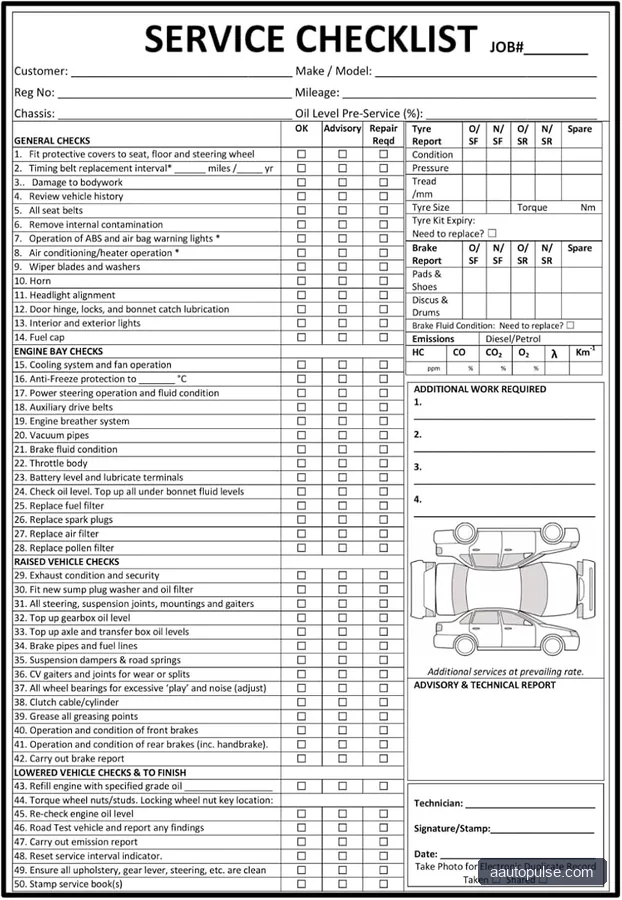
Below is a practical car servicing checklist you can use for most passenger vehicles. Some items are simple visual checks. Others need a shop visit or a more skilled do-it-yourself approach.
1. Engine oil and oil filter
Check the oil level monthly and before long trips. Many modern cars use synthetic oil and may go about 5,000 to 10,000 miles between changes, but that range depends on the engine, driving style, and oil spec. Always verify the interval and viscosity in the owner’s manual.
If your oil looks very dark, smells burnt, or the level drops often, do not wait. A proper tune-up checklist should also note the filter change, since a fresh filter helps keep contamination under control.
2. Tires, pressure, tread, and rotation
Tire pressure should be checked at least once a month and before road trips. Look for the recommended PSI on the driver’s door placard, not the sidewall. Uneven wear, vibration, or a pull to one side can signal alignment or suspension problems.
Rotation is often due every 5,000 to 7,500 miles, but tire type and drivetrain can change that. If your tire tread is close to the wear bars or below 2/32 inch, replacement is due. A solid car vehicle checklist should always include the spare, jack, and lug wrench if your vehicle has them.
3. Brakes
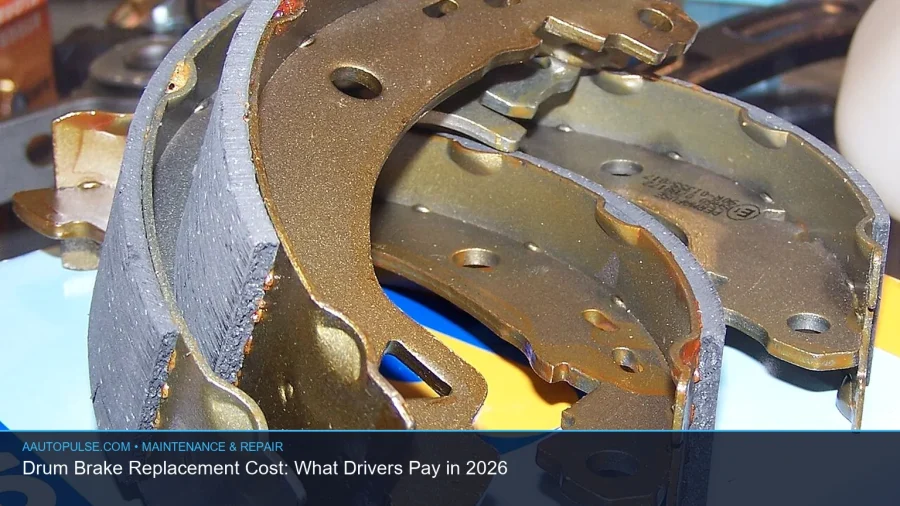
Brake pads, rotors, fluid, and pedal feel belong on every vehicle maintenance checklist. Squealing, grinding, longer stopping distance, or a soft pedal should be checked right away. Brake fluid is often inspected during routine service and may need replacement every 2 to 3 years, but the manual should guide the interval.
Because braking affects safety so much, treat any warning light or strange noise as urgent. If the car pulls while braking or the pedal feels spongy, schedule an inspection without delay.
4. Fluids
Beyond engine oil, check coolant, transmission fluid, power steering fluid if equipped, windshield washer fluid, and brake fluid. Some vehicles have sealed systems or special procedures, so do not guess. Use the exact fluid type listed by the manufacturer.
Low fluid levels can be a sign of leaks or wear. If you notice puddles under the car, a sweet smell, or a visible drop in level, add diagnosis to the checklist instead of just topping off the fluid.
5. Battery and charging system
A weak battery often gives early clues: slow cranking, dim lights, clicking on startup, or frequent jump starts. Many car batteries last about 3 to 5 years, though heat, short trips, and idle time can shorten that window.
Check the terminals for corrosion and make sure the battery is secured. If the car sits for long periods, a battery maintainer can help, but the charging system still needs periodic checks.
6. Air filters and cabin filters
The engine air filter helps protect performance and efficiency, while the cabin filter affects air quality inside the vehicle. Many drivers inspect them at least once a year, though dusty roads or heavy pollen may mean more frequent replacement.
A clogged air filter can reduce airflow and hurt drivability. A dirty cabin filter can weaken HVAC performance and create musty airflow inside the car.
7. Belts, hoses, lights, and wipers
Look for cracking, fraying, leaks, and swelling on belts and hoses. Check headlights, brake lights, turn signals, reverse lights, and interior warning lights. Replace worn wiper blades when they streak, chatter, or leave spots on the windshield.
This simple car checklist can prevent avoidable issues and improve safety in bad weather. It is also one of the easiest places to catch trouble before it becomes expensive.
How to Build a Simple Maintenance Routine
A useful car maintenance checklist works best when it is tied to a schedule. For most drivers, it helps to break tasks into monthly, quarterly, and mileage-based steps. That way the list is easy to follow and hard to forget.
- Monthly: Check tire pressure, fluid levels, dashboard warnings, lights, wipers, and visible leaks.
- Every 3 months or 3,000 to 5,000 miles: Review oil life, tire wear, battery condition, and brake feel.
- Every 5,000 to 7,500 miles: Rotate tires if recommended, inspect filters, and confirm all fluids are in range.
- Every 12 months: Review belts, hoses, suspension wear, cabin filter, and a full vehicle maintenance checklist with service records.
- At longer mileage intervals: Follow manual-based items such as spark plugs, coolant service, transmission service, and drive belt replacement.
If your car sees severe use, such as heavy traffic, short trips, towing, extreme heat, or very cold weather, the schedule may tighten. That is why the owner’s manual matters more than any general guide.
Using a Car Maintenance Log Book to Stay Organized
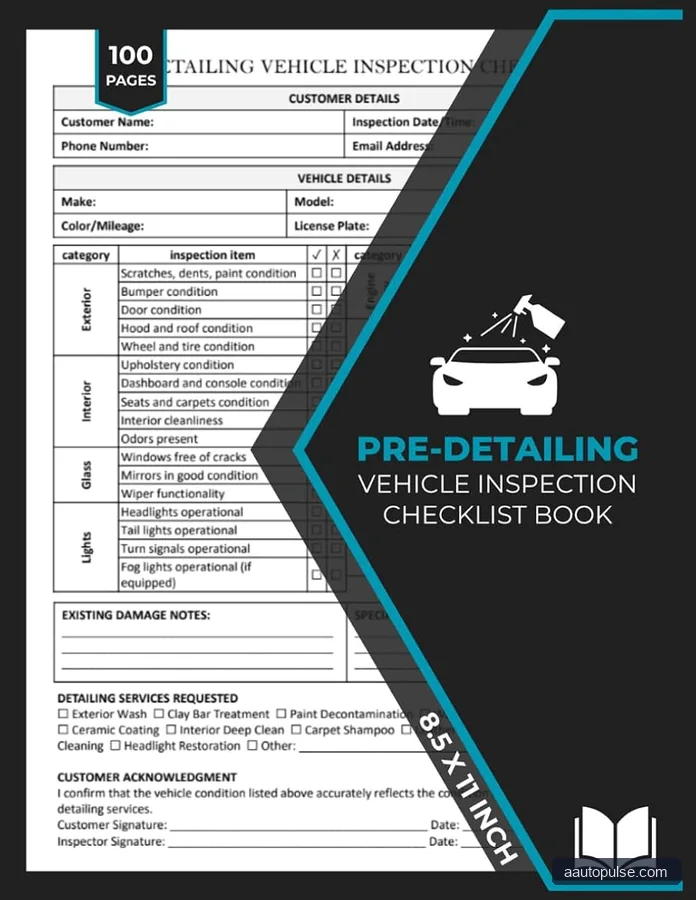
A car maintenance log book makes your routine much easier to follow. It gives you one place to track dates, mileage, oil changes, tire rotations, brake work, and fluid top-offs. A simple car maintenance log template can be a notebook, spreadsheet, or printable form.
Good records help you spot patterns, like repeated battery issues or tires wearing faster than expected. They also support warranty claims and help preserve the car maintenance history if you sell the vehicle later.
| Option | Best For | Strengths | Limitations |
|---|---|---|---|
| Paper car maintenance log book | Drivers who want a quick manual record | Simple, low-tech, easy to keep in the glove box | Can be lost or damaged; harder to search later |
| Car maintenance log template | People who want a repeatable system | Easy to reuse, compare dates, and track mileage | Still depends on regular updates |
| Digital notes or spreadsheet | Drivers who want search and backup features | Easy to sort by date, mileage, and service type | Requires device access and basic organization |
| Car maintenance checklist PDF | Drivers who want a printable reference | Easy to print and keep with records | May need updates if your vehicle schedule changes |
Who should choose what: If you want the simplest system, use a paper log book. If you like structure, choose a template. If you want searchability and backups, use a digital log. If you prefer something you can print, a PDF-style checklist works well.
Common Problems a Quick Car Check Up Can Catch
A routine car check up is not just about scheduled maintenance. It is also a fast way to catch warning signs before a breakdown happens. The table below can help you decide what to do when something seems off.
| Symptom | Possible Cause | What to Do |
|---|---|---|
| Hard start or slow crank | Battery, starter, or charging issue | Check battery age and terminals; test system soon |
| Vibration at speed | Tire balance, tire damage, or alignment | Inspect tires and schedule service |
| Squealing or grinding brakes | Worn pads or rotor wear | Get brakes inspected right away |
| Overheating or coolant smell | Low coolant, leak, or cooling system fault | Stop driving if temperature rises; inspect promptly |
| Poor fuel economy | Underinflated tires, dirty filters, maintenance overdue | Review the checklist and service history |
If the check engine light comes on, do not ignore it just because the car still drives. Some issues are minor, but others can affect emissions, drivability, or engine protection. Use the diagnostic information as one more item in your checklist rather than a reason to delay service.
FAQ
How often should I use a car servicing checklist?
Use it monthly for basic checks and at each oil change for a fuller review. Then add mileage-based tasks such as tire rotation, fluid service, and filter replacement as your owner’s manual recommends.
Is a car maintenance checklist PDF enough for most drivers?
A car maintenance checklist PDF can be a very good start if it is updated for your vehicle. The best version is one that matches your car’s service intervals, includes your mileage, and leaves space for notes and repair dates.
What should be in a basic car tune-up checklist?
A basic car tune-up checklist should include spark plugs if your vehicle is due, air and cabin filters, battery inspection, fluid checks, throttle and sensor checks when applicable, and a scan for warning lights or drivability issues. Exact tune-up items vary by vehicle, so confirm the schedule in the manual.
How do I keep a complete car maintenance history?
Save every receipt, service note, and mileage entry in one place. A car maintenance log book or template helps, but the key is consistency. Record the date, odometer reading, work done, and any next-service date or mileage target.
Can I use one checklist for every car?
You can use a general car checklist as a starting point, but each vehicle may have different fluids, service intervals, and inspection points. Hybrid, turbocharged, diesel, and high-mileage vehicles often need more specific care.
Conclusion
A reliable car servicing checklist keeps maintenance simple and helps prevent costly surprises. Focus on the basics: oil, tires, brakes, fluids, battery, filters, lights, and records. Then build a routine that fits your mileage and driving conditions.
For the best results, compare your checklist with your owner’s manual, keep a clear maintenance log, and act early when something changes. That is the easiest path to safer driving and better long-term reliability in 2026.