Front-wheel drive cars handle winter better than many drivers expect, but they still need the right tires. If you want the safest, most practical answer to winter tires for front wheel drive car, the short version is this: choose a true winter tire with the three-peak mountain snowflake symbol, size it to your owner’s manual, and replace all four tires as a set when possible. Front-wheel drive helps with traction, but it does not replace winter rubber. Below, you’ll learn how to pick the best option, what matters most, and how to avoid common mistakes with winter tires on a FWD car.
📖 Table of Contents
- Why Front-Wheel Drive Still Needs Winter Tires
- How to Choose the Best Winter Tires for a FWD Car
- What to Look for in Winter Tires on a FWD Car
- How to Install and Use Winter Tires Safely
- Pressure, Wear, and Emergency Gear You Should Keep in the Car
- How Winter Tires Compare with Other Common Tire Choices
- How Long Do Car Tires Last, and When Should You Replace Them?
- FAQ
📌 Key Takeaways
- Front-wheel drive helps with pulling the car forward, but winter tires provide the grip you need for braking, turning, and climbing in snow and slush.
- Choose a dedicated winter tire, not an all-season, if you drive in regular snow, ice, or sustained cold below 45°F.
- For the best balance, match all four tires in size and type, and check pressure often because cold weather lowers tire pressure.
- Use your owner’s manual for exact sizes and load ratings, and inspect for uneven tire wear before winter starts.
Why Front-Wheel Drive Still Needs Winter Tires
Front-wheel drive puts more of the car’s weight and engine pull over the front axle, which can help in light snow. But traction at the driven wheels is only one part of winter safety. You still need grip for steering and stopping, and that is where winter tires make the biggest difference.
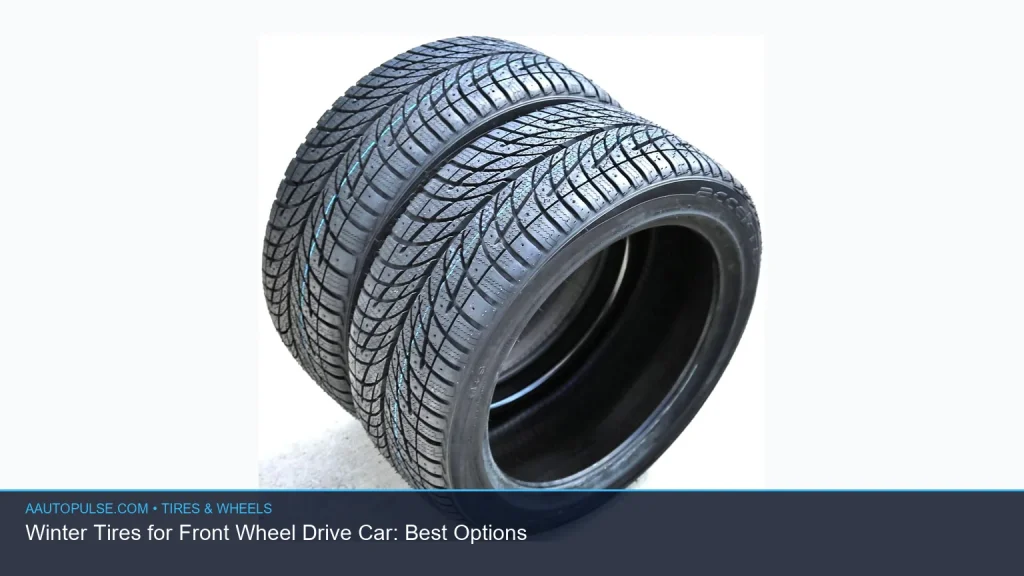
Winter tires use softer rubber and deeper tread patterns that stay flexible in cold weather. That helps the tire bite into snow and evacuate slush better than a typical all-season tire. If you drive in freezing conditions often, winter tires for front wheel drive car use are one of the smartest upgrades you can make.
What winter tires do better than all-seasons
- Improved traction on snow and packed ice
- Shorter stopping distances in cold conditions
- Better cold-weather flexibility
- More confident cornering on winter roads
Some drivers assume front-wheel drive alone is enough. It is not. A FWD car with worn all-season tires can struggle to stop or turn, even if it starts moving well. That is why the right tire matters more than the drivetrain when roads turn slick.
How to Choose the Best Winter Tires for a FWD Car

The best choice depends on your climate, driving style, and the kind of roads you face. If you see regular snow and ice, prioritize a true winter tire. If your winters are mild but cold, you may be comparing winter-focused all-weather tires against full winter tires.
Start with your vehicle’s exact tire size, load index, and speed rating in the owner’s manual or on the driver-side door placard. Then look for the three-peak mountain snowflake symbol, which indicates a tire is built for severe snow service. Do not size up or down without confirming fitment.
| Tire Type | Strengths | Limitations | Best For |
|---|---|---|---|
| Dedicated winter tire | Best snow and ice grip, strong cold-weather braking | Noisy, faster wear in warm weather | Drivers in real winter conditions |
| Winter-rated all-weather tire | More convenient year-round use | Usually less traction than a full winter tire | Mild winters and drivers who want one set |
| All-season tire | Good in moderate temperatures, common and convenient | Limited snow and ice performance | Light winter use only |
Who should choose what? If you regularly drive in snow belt states, choose a dedicated winter tire. If you get occasional cold snaps but little snow, a winter-rated all-weather tire may be enough. If your area stays warm most of the year, all-seasons are fine, but they are not a substitute for winter rubber.
What to Look for in Winter Tires on a FWD Car
When comparing winter tires on fwd car options, focus on traction first and marketing second. Tread design, compound, size, and load rating matter more than brand slogans. You also want a tire that fits your car’s personality, whether that is a commuter sedan, compact hatchback, or sporty daily driver.
Key selection criteria
- Severe snow rating: Look for the three-peak mountain snowflake symbol.
- Proper size: Match the door-jamb placard or owner’s manual.
- Load index: Do not go below the vehicle’s required rating.
- Tread pattern: Look for lots of sipes and channels for snow evacuation.
- Noise and comfort: Winter tires can vary a lot in road noise and ride feel.
If you drive a heavier vehicle or carry passengers and gear often, load capacity is especially important. For example, compact crossovers and larger sedans may need a different rating than a small commuter car. For a sports car tire setup, winter tire fitment may be more limited, so confirm wheel size and clearance before buying.
Also think about how you drive. Aggressive acceleration can overwhelm even good winter tires, while gentle throttle and smooth braking let them work better. Front-wheel drive gives you an advantage on takeoff, but winter grip still depends on the tire compound and tread.
How to Install and Use Winter Tires Safely

Install winter tires before the first real freeze, not after the first storm. A good rule is to switch when temperatures stay below about 45°F for much of the day. That is when winter compounds begin to make more sense than all-season rubber.
Use four matching winter tires whenever possible. Putting winter tires only on the front of a FWD car can create a serious balance problem, where the front grips well but the rear loses control in turns or during sudden maneuvers. That is one reason many tire experts recommend a full set instead of a partial swap.
- Check the tire size, load index, and speed rating in your owner’s manual.
- Inspect the current tires for cracks, bulges, or uneven tire wear car patterns.
- Mount the winter tires on all four wheels if possible.
- Set pressure to the vehicle placard, not the sidewall number.
- Recheck pressure after the first cold snap and at least once a month.
- Rotate according to the service schedule in your manual, often every 5,000 to 7,500 miles.
If you store winter tires off-season, keep them in a cool, dry place away from sunlight and chemicals. Mark their positions if you plan to reuse them, and inspect tread depth before reinstalling. Even if a tire still has tread, rubber ages and can lose winter performance over time.
Pressure, Wear, and Emergency Gear You Should Keep in the Car
Cold weather lowers tire pressure, so checking inflation is a must. A reliable car tire pressure gauge is one of the simplest tools you can keep in the glove box. For most passenger cars, the average car tire pressure is usually found around 30 to 35 psi, but you should always use the exact placard number for your vehicle.
Low pressure can hurt fuel economy, increase wear, and reduce winter traction. Overinflation can also reduce grip and make the ride harsh. Check pressures when the tires are cold, ideally before driving or after the car has sat for several hours.
Useful winter road tools
- Car tire pressure gauge: Helps you confirm correct pressure in cold weather.
- Best portable tire inflator for cars: Handy if you lose pressure away from home.
- Car tire repair kit: Useful for temporary roadside fixes on small punctures, if your tire type and damage allow it.
- Spare tire on car: Make sure it is inflated and in usable condition before winter starts.
Not every puncture can be fixed with a tire repair kit. Sidewall damage, large holes, and internal damage need professional inspection. If your car uses a compact spare, confirm the speed and distance limits in the manual before relying on it in winter. A spare tire on car use is for emergencies only, not long-term driving.
| Problem | Likely Cause | What to Do |
|---|---|---|
| Car pulls or slips in turns | Uneven tread, low pressure, or mixed tire types | Check pressures, inspect tread, and match all four tires |
| Poor braking on snow | All-season tires or worn winter tires | Use true winter tires and replace worn sets |
| Rapid center wear | Overinflation | Reset pressure to the placard spec |
| Wear on one edge | Alignment or suspension issue | Get alignment checked and inspect suspension |
How Winter Tires Compare with Other Common Tire Choices
Some drivers ask about alternatives such as cooper all terrain car tires or other all-terrain options. Those tires are built more for mixed road and light off-road use than for ice and packed snow. In winter, a dedicated winter tire still gives more predictable braking and cornering on cold pavement and snow-covered roads.
Likewise, a winter tire is not the same as a rear-drive performance tire or a sports car tire. Performance tires can feel sharp and responsive in warm weather, but many lose grip quickly once temperatures drop. That is why tire category should always match the season and driving environment.
It also helps to remember that winter tires for rear wheel drive cars are even more important in some cases, since RWD cars can be harder to launch in snow. But drivetrain alone is never the whole story. Whether your car is FWD or RWD, the tire is the last part touching the road, and it does the most work when conditions get bad.
How Long Do Car Tires Last, and When Should You Replace Them?
How long do car tires last depends on driving style, road conditions, storage, and maintenance. Many passenger tires last several years, but winter tires often wear faster if they are used in warm weather. That is why seasonal rotation matters so much.
Replace winter tires when tread gets low, when rubber ages, or when cracking appears. If you notice uneven tire wear car patterns, get the alignment checked before installing a new set. Uneven wear can shorten the life of both winter and all-season tires and can make the car less stable in snow.
As a simple check, look for reduced tread depth, visible cracking, vibration, or a loss of predictable grip. If the tires are past their useful winter life, even if they still have legal tread, they may not perform well in snow or ice. Always verify replacement timing with your owner’s manual and a trusted tire professional if needed.
FAQ
Can I use winter tires only on the front of my FWD car?
You can, but it is not ideal. Putting winter tires only on the front of a front-wheel drive car can create unstable handling because the rear tires may lose grip sooner in turns and sudden maneuvers. A full set of four winter tires is the safer choice.
Do I need winter tires if I already have all-wheel drive?
Yes, if you drive in real winter weather. AWD helps you move, but it does not help much with stopping or turning. Winter tires improve grip in those areas no matter what drivetrain you have.
How often should I check tire pressure in winter?
Check it at least once a month and after big temperature drops. Cold weather can lower pressure quickly, so a car tire pressure gauge is a useful tool to keep in the vehicle. Use the door placard pressure, not the tire sidewall number.
Can a car tire repair kit fix winter tires?
Sometimes, but only for small punctures in the tread area and only if the damage is suitable for repair. Sidewall damage, large holes, or internal issues are not safe to patch with a kit. If in doubt, have the tire inspected before driving far.
Are winter tires worth it for mild winters?
They can be, but it depends on how often temperatures drop below freezing and whether you see snow or ice. In mild climates with rare cold snaps, a winter-rated all-weather tire may be enough. In colder regions, true winter tires are usually the better pick.
Winter tires for a front-wheel drive car are one of the most effective ways to improve cold-weather safety. Start with the correct size, choose a true winter compound, and keep all four tires matched and properly inflated. Before the season starts, inspect wear, verify your spare tire on car setup, and keep basic roadside gear ready. If you do those things, your FWD car will be better prepared for snow, slush, and freezing roads.