If you’re curious about an electric vehicle conversion kit, the short answer is this: it can turn a gas-powered car, truck, or classic project into an EV, but the right kit depends on your vehicle, budget, skill level, and local rules. Some conversions are great for hobbyists and restorations. Others are too complex or too costly to make sense for daily driving. This guide explains how conversion kits work, what to check before buying, and how to choose the safest path for your build.
📖 Table of Contents
- What an Electric Vehicle Conversion Kit Actually Does
- Is an Electric Vehicle Conversion Kit Right for Your Car?
- How to Evaluate Conversion Kits Before You Buy
- Installation Steps and Safety Checks
- Comparing Conversion Paths: DIY Kit, Partial Kit, or Custom Build
- Common Problems and How to Troubleshoot Them
- Legal, Registration, and Insurance Questions US Drivers Should Check
- FAQ: Electric Vehicle Conversion Kit Basics
- Conclusion: Start with the Vehicle, Not the Kit
📌 Key Takeaways
- An electric vehicle conversion kit replaces part or all of a gas drivetrain with electric components, but it is not a one-size-fits-all solution.
- The best kit choice depends on vehicle weight, packaging space, desired range, charging needs, and your fabrication skills.
- Safety, battery placement, wiring quality, and legal compliance matter as much as motor power.
- For most US drivers, the smartest move is to compare the full project cost and complexity before buying any kit or donor parts.
What an Electric Vehicle Conversion Kit Actually Does
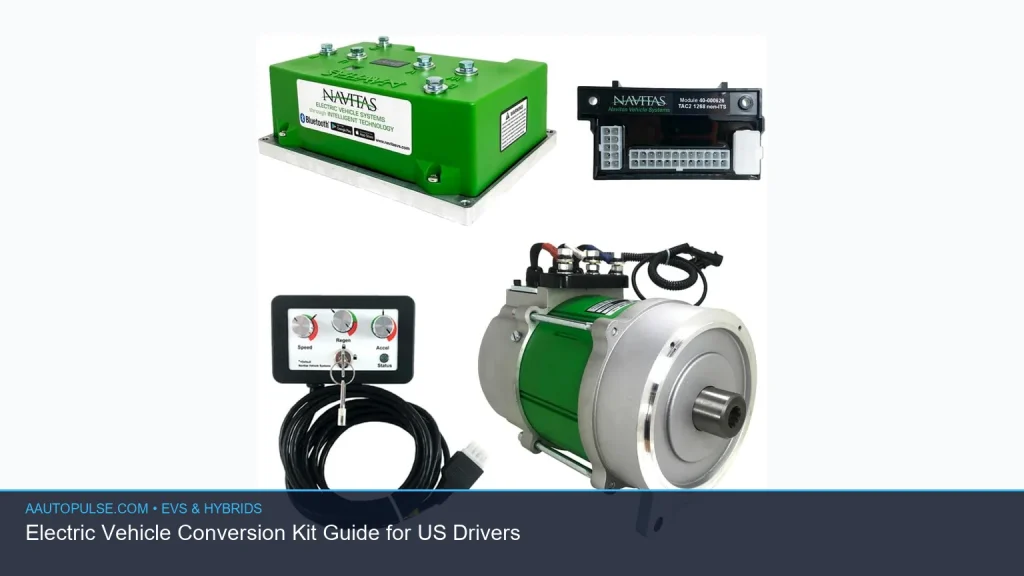
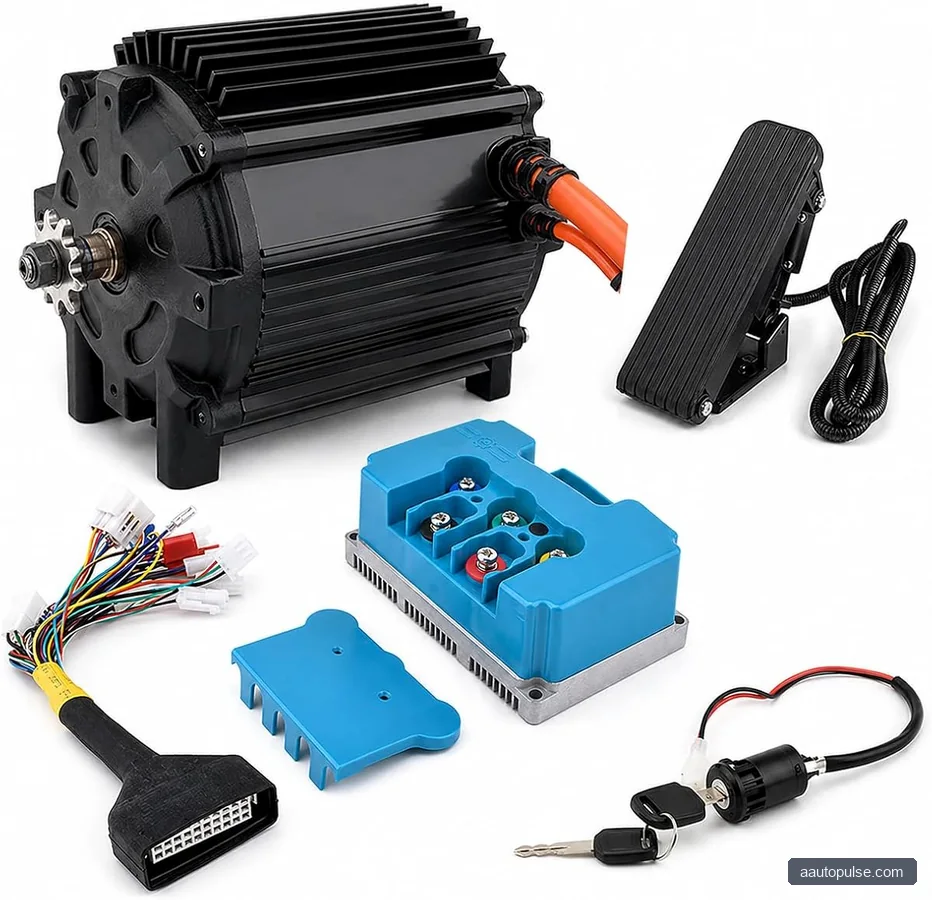
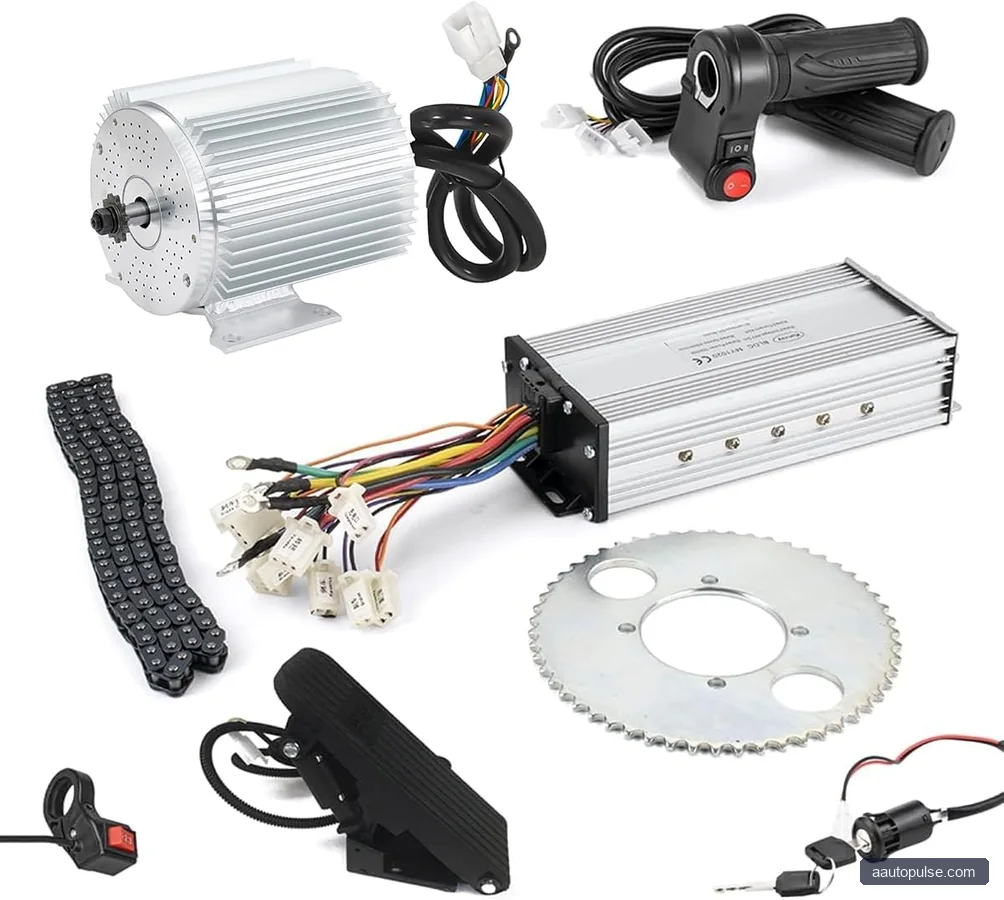
An electric vehicle conversion kit is a package of parts used to replace a combustion engine setup with electric drive components. In a basic conversion, that may include an electric motor, controller, wiring, battery pack, charger, cooling parts, and mounting hardware. Some kits are more complete than others, while some projects rely on custom-built parts instead of a single bundled kit.
The goal is to keep the vehicle’s body and much of its structure while changing how it is powered. That can make sense for a classic car, a light commuter, or a platform with enough room for batteries and safe mounting. It is much harder on vehicles with limited space, modern electronics, or complex all-wheel-drive systems.
Common parts in a conversion
- Electric motor for propulsion
- Motor controller to manage power delivery
- Battery pack for energy storage
- On-board charger for AC charging
- DC-DC converter for 12-volt accessories
- Thermal management parts, if needed
- Mounts, cabling, and safety disconnects
Is an Electric Vehicle Conversion Kit Right for Your Car?
Not every vehicle is a good candidate. The best candidates usually have simple mechanical layouts, enough room for batteries, and a chassis that can safely handle added weight in the right places. Popular candidates often include older compact cars, small trucks, and classics where preserving the original look matters more than factory-spec performance.
Before buying a kit, think about what you want the finished vehicle to do. A weekend cruiser, a city commuter, and a tow-capable truck all need different battery size, motor output, and charging setup. If your goal is daily reliability, the conversion plan should be more conservative than a hobby build.
| Vehicle type | Fit for conversion | Strengths | Limitations |
|---|---|---|---|
| Classic coupe or sedan | High | Simple layout, strong enthusiast value, easier packaging | May need custom fabrication and careful brake/suspension checks |
| Small pickup | Moderate | More space for batteries and useful utility | Weight and range demands rise fast |
| Modern sedan | Moderate to low | Safer crash structure and better road manners | Complex electronics can make integration difficult |
| SUV or full-size truck | Low to moderate | Space for components | Heavy platform increases cost, battery size, and complexity |
How to Evaluate Conversion Kits Before You Buy
Because no two builds are the same, the best conversion kit is the one that fits your vehicle and your goals. Start with vehicle weight, intended range, charging access, and whether you want to retain manual transmission or switch to a direct drive setup. Then confirm that the motor, controller, and battery system are sized for that plan.
Do not focus only on motor power. Range depends on battery capacity, driving style, terrain, temperature, and vehicle drag. A kit that seems strong on paper may still underperform if the batteries are too small or the installation leaves little room for cooling and service access.
Selection criteria that matter most
- Compatibility: Does the kit match your vehicle’s drivetrain layout and space?
- Voltage architecture: Is the system designed as a complete package?
- Battery packaging: Can the pack fit securely without harming crash safety?
- Charging setup: Will it work with your home or workplace charging plan?
- Support documentation: Are wiring diagrams, mount guidance, and safety instructions available?
- Serviceability: Can you inspect, isolate, and maintain the system later?
Installation Steps and Safety Checks
Converting a vehicle is a serious electrical and mechanical job. If you are not experienced with high-voltage systems, fabrication, and vehicle diagnostics, professional help is a wise choice. High-voltage battery packs can be dangerous if wiring, insulation, or mounting is done poorly.
Before any installation, review the vehicle owner’s manual, inspect the chassis, and map out every major part of the build. You should also confirm local registration, inspection, and insurance rules in your state, since requirements can vary widely across the US.
- Assess the vehicle: Check rust, frame condition, brake health, and suspension wear.
- Plan the layout: Decide where the motor, batteries, charger, and cooling parts will go.
- Remove gas components: Engine, exhaust, fuel tank, and related systems are typically removed.
- Install the electric drive: Mount the motor and align it with the drivetrain or direct-drive setup.
- Place and secure batteries: Use strong mounts and protect the pack from road debris and crash risk.
- Wire the system: Add proper fusing, contactors, disconnects, and insulation.
- Test low-voltage functions: Verify 12-volt systems, gauges, lights, and accessory power.
- Perform controlled road tests: Start with short, low-speed checks before full use.
Safety cautions to take seriously
- Never work on high-voltage parts without proper training and lockout steps.
- Do not place batteries where they can shift, overheat, or be crushed in a crash.
- Use proper cable sizing, insulation, and overcurrent protection.
- Confirm that brakes and suspension can handle the final vehicle weight.
Comparing Conversion Paths: DIY Kit, Partial Kit, or Custom Build
There is more than one way to convert a vehicle. Some owners want a mostly complete kit. Others buy major components and let a specialist handle fabrication. A few build nearly everything from scratch. The right choice depends on your skill, time, and tolerance for risk.
| Approach | Best for | Strengths | Limitations | Who should choose it |
|---|---|---|---|---|
| DIY conversion kit | Hands-on hobbyists | More control, learning value, potential cost savings on labor | High risk of errors, time intensive, requires tools and knowledge | Choose this if you can fabricate, wire, and troubleshoot safely |
| Partial kit plus specialist help | Most first-time converters | Balanced cost, better safety, less guesswork | Still requires planning and project management | Choose this if you want support without giving up the project |
| Custom build | Unique or complex vehicles | Best fit for unusual layouts and special goals | Highest complexity and least predictability | Choose this only if your build needs custom engineering |
Verdict: If you are new to conversions, a partial kit with experienced help is usually the safest path. If your vehicle is simple and you have strong electrical and fabrication skills, a DIY kit can work well. If the car is rare, modern, or heavily modified already, a custom build may be the only practical route.
Common Problems and How to Troubleshoot Them
Many conversion issues come from setup, not from the kit itself. Loose wiring, poor grounds, weak battery mounting, or an undersized cooling system can cause driveability or reliability problems. A careful checklist can save time and reduce the chance of damage.
| Symptom | Likely causes | What to check first |
|---|---|---|
| Vehicle will not power on | Main disconnect open, fuse issue, control fault, weak 12-volt battery | Low-voltage battery, interlocks, and safety switch positions |
| Reduced range | Small battery pack, cold weather, heavy vehicle, high-speed driving | Battery capacity, tire pressure, and driving pattern |
| Motor overheats | Poor cooling, aggressive tuning, oversize load | Cooling flow, fan operation, and controller settings |
| Poor braking feel | Weight changes, worn pads, brake imbalance | Pads, rotors, fluid condition, and suspension health |
Legal, Registration, and Insurance Questions US Drivers Should Check
Rules for converted vehicles vary by state, county, and insurer. Some places want specific inspections or paperwork that proves the vehicle is safe and road legal. Others may ask how the powertrain change affects title status, emissions exceptions, or body classification.
Before final assembly, contact your state DMV or similar agency and ask what documentation they require. You should also ask your insurance provider how they handle converted vehicles. It is better to confirm those details early than to finish the build and discover a registration or coverage problem later.
FAQ: Electric Vehicle Conversion Kit Basics
How much range can I expect from a conversion kit?
Range depends on battery size, vehicle weight, speed, terrain, and climate. A lighter car with a well-planned battery pack will usually go farther than a heavy vehicle with the same pack. Because no two conversions are alike, always verify range estimates against the actual battery capacity and the intended use of the car.
Can any car be converted to electric?
No. Some cars are practical candidates, while others are too complex, too heavy, or too hard to package safely. Older vehicles with simple mechanical systems are often easier to convert than modern cars with tight electronics integration.
Is a conversion kit safe for daily driving?
It can be, if the build is engineered well and the vehicle is properly inspected. Safety depends on battery mounting, high-voltage protection, thermal management, braking performance, and overall workmanship. If any of those are weak, daily use becomes a risk.
Do I need a professional installer?
Not always, but many owners benefit from professional help. If you do not have experience with high-voltage systems, fabrication, or auto electrical work, a specialist can reduce the chance of mistakes. A partial DIY plan is often a better choice than a fully self-directed build.
Should I convert my car or buy an EV instead?
That depends on your goals. If you want a reliable commuter with low upkeep, buying a factory EV may be simpler. If you love a classic vehicle or want a unique project, a conversion can make more sense, especially when preserving the body and style matters most.
Conclusion: Start with the Vehicle, Not the Kit
The best way to approach an electric vehicle conversion kit is to begin with your vehicle, your goals, and your limits. Check the chassis, plan the battery layout, review legal rules, and compare the full system needs before you buy anything. If you stay realistic about range, safety, and installation complexity, you’ll make a better decision and avoid expensive surprises.
If you are considering a conversion, start by shortlisting your vehicle, confirming state requirements, and getting a clear build plan. Then compare kit types only after you know what your project truly needs.