If your disc brake rotor front is warped, worn, or making noise, the fix is usually straightforward: inspect the pads and caliper, confirm rotor thickness and condition, then replace the front rotors in pairs if needed. This guide explains when replacement makes sense, what the job involves, and what you can expect to pay. It also covers the warning signs that point to rotor problems instead of pad wear, so you can make a smart repair decision and avoid unnecessary work.
📖 Table of Contents
- What a Front Brake Rotor Does
- Signs Your Disc Brake Rotor Front Needs Replacement
- How to Inspect a Front Brake Rotor
- Should You Replace or Resurface the Rotor?
- Front Rotor Replacement: What the Job Usually Involves
- What Does a Front Brake Rotor Cost?
- How to Choose the Right Replacement Rotor
- FAQ About Front Brake Rotor Replacement
- Conclusion: Make the Brake Repair Count
📌 Key Takeaways
- Front brake rotors wear faster than rear rotors on many vehicles because they handle more stopping force.
- Pulsation, squealing, scoring, and uneven pad wear are common signs that a rotor may need replacement or machining.
- Front rotors are usually replaced in pairs, and new pads are often installed at the same time for even braking.
- Always verify rotor thickness, bolt pattern, and your vehicle’s service limits in the owner’s manual or service data before buying parts.
What a Front Brake Rotor Does
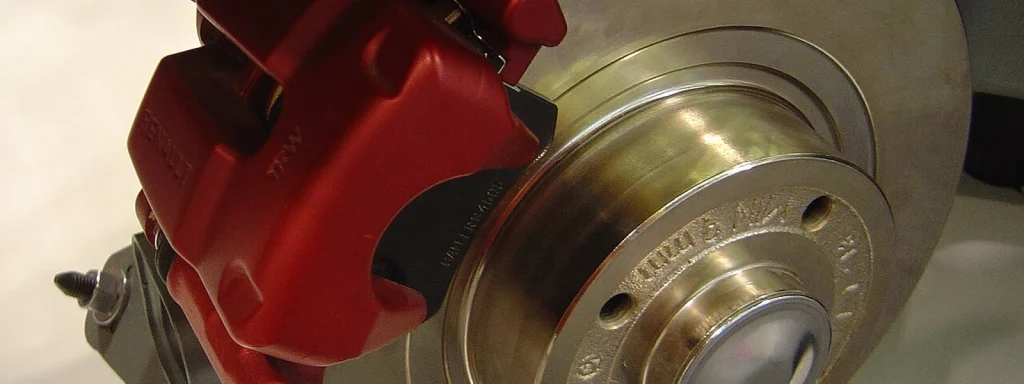
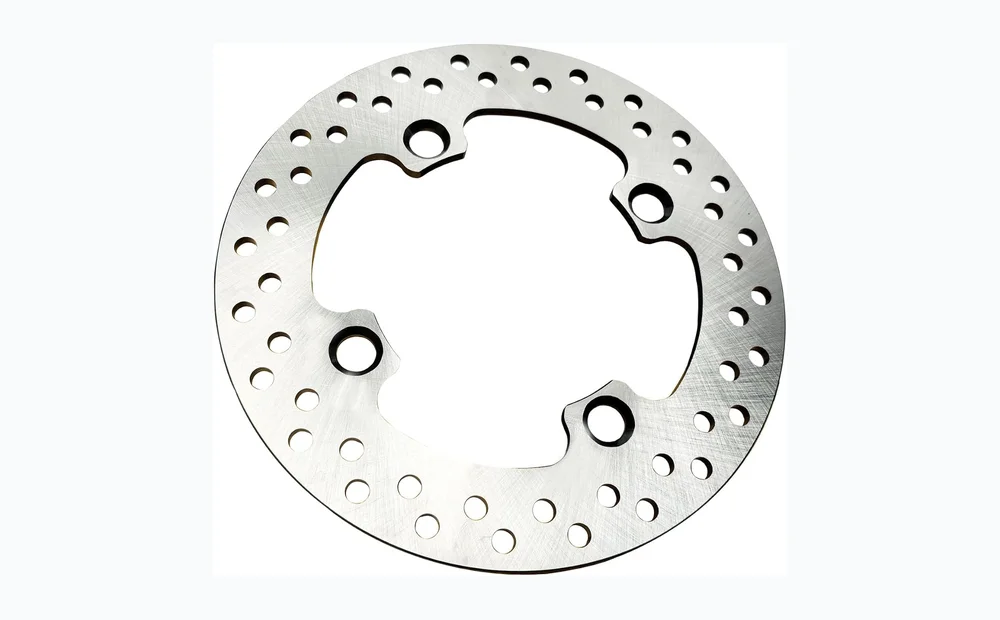
The front brake rotor is the metal disc that your brake pads clamp down on to slow the vehicle. In plain terms, the brake disc brake rotor turns motion into heat, and the brake system must manage that heat again and again every time you stop. Because the front brakes do most of the work on many cars and SUVs, front rotors often wear sooner than rear ones.
Rotors can be solid or vented, depending on the vehicle. Vented rotors are common on the front axle because they cool better and help reduce brake fade under repeated use.
Signs Your Disc Brake Rotor Front Needs Replacement
Not every brake noise means a rotor is bad. Still, certain symptoms point strongly toward front rotor trouble, especially if they appear when braking from moderate or highway speed.
- Brake pedal pulsation: The pedal shakes or pushes back during braking.
- Steering wheel shake: A warped or uneven front rotor can create vibration through the wheel.
- Squealing or grinding: High-pitched noise can mean pad wear, while grinding may signal metal contact.
- Visible grooves or scoring: Deep marks on the rotor surface can reduce smooth braking.
- Blue spots or heat cracks: These can point to overheating.
- Uneven pad wear: One side of the pad wearing much faster can mean rotor or caliper issues.
If the rotor surface looks rusty on the outer edge but the brake face is smooth, that is not always a replacement issue. Light surface rust can be normal after rain or storage, but deep corrosion, cracking, or a lip you can feel with a fingernail may mean the rotor is near the end of its life.
Quick symptom check
| Symptom | Likely cause | Next step |
|---|---|---|
| Pedal pulsation | Rotor runout or uneven wear | Measure thickness and inspect rotor face |
| Grinding noise | Pads worn through or rotor damage | Stop driving if braking feels unsafe |
| Squeal only at low speed | Pad wear, glazing, or hardware issue | Inspect pads and shims before replacing rotors |
| Pulling to one side | Caliper, pad, or rotor issue | Check caliper slide pins and pad wear |
How to Inspect a Front Brake Rotor
You do not need to guess. A careful visual check can tell you a lot before you spend money on parts. If you can safely remove the wheel, you can inspect the rotor face, pad thickness, and caliper hardware.
- Park safely and let the brakes cool. A hot rotor can burn skin and distort readings.
- Check the rotor surface. Look for grooves, cracks, heavy rust, and blue heat marks.
- Look at the pads. If friction material is very thin, the rotor may have been damaged by metal contact.
- Measure thickness. Compare the reading with the minimum thickness listed by the manufacturer or service data.
- Inspect for runout or wobble. Excess play can cause pulsation, but the hub, wheel bearing, or mounting surface may also be involved.
- Check the caliper slides. Sticking slide pins can make one side of the rotor wear faster.
Many vehicles do not need rotor replacement at a fixed mileage. That said, front brakes often need inspection around every 10,000 to 15,000 miles, while pad life commonly falls somewhere in the 30,000 to 70,000 mile range depending on vehicle weight, driving style, and terrain. Always verify the service interval in your owner’s manual because real-world wear can differ a lot.
Should You Replace or Resurface the Rotor?
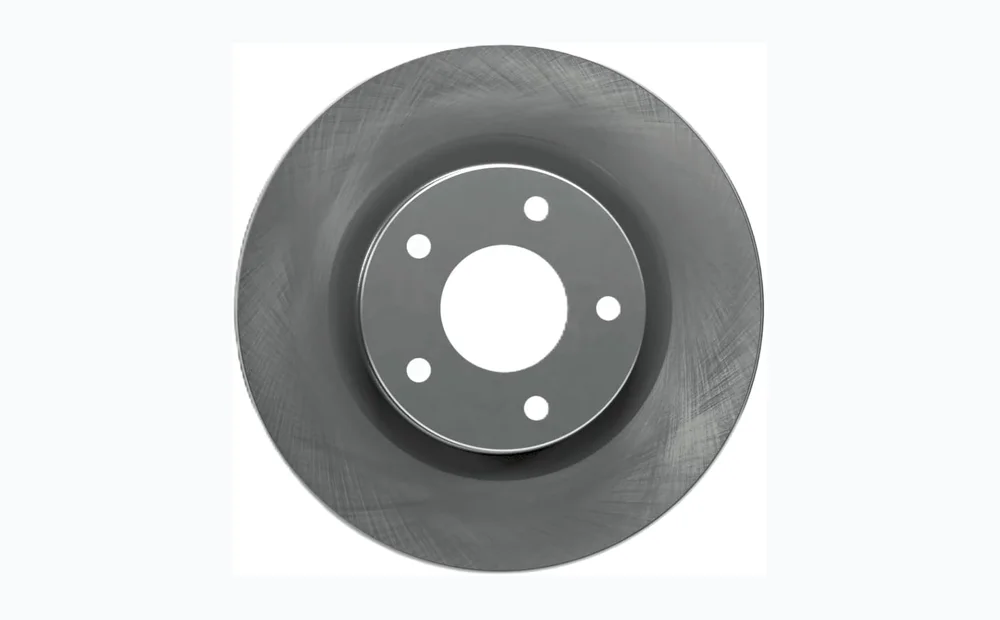
Some rotors can be resurfaced, but many modern rotors are replaced instead. Replacement is often the better choice when the rotor is below minimum thickness, heavily rusted, cracked, or already worn too far to machine safely.
| Option | Strengths | Limitations | Best for |
|---|---|---|---|
| Resurface | Can restore a smooth braking surface at lower part cost | Removes material and may not be allowed if rotor is near minimum thickness | Thicker rotors with mild wear |
| Replace | Fresh rotor, full thickness, simple decision | Higher parts cost than machining alone | Cracked, warped, rusty, or thin rotors |
Who should choose what? If the rotor is still well above minimum thickness and only lightly uneven, resurfacing may be reasonable when the vehicle manufacturer allows it. If you are unsure, replacement is often the safer long-term choice, especially on family vehicles, daily drivers, and anything that sees heavy stop-and-go use.
Front Rotor Replacement: What the Job Usually Involves
Front rotor replacement is a standard brake service, but the details matter. If you are doing it yourself, you need the right tools, a safe lifting setup, and a careful brake bleed only if the hydraulic system is opened.
- Lift and secure the vehicle. Use jack stands on solid ground.
- Remove the wheel. Then inspect the caliper, pads, and rotor.
- Remove the caliper and bracket. Support the caliper so the brake hose is not stretched.
- Pull off the rotor. Some may need light tapping if rust has seized them to the hub.
- Clean the hub face. Rust or debris here can cause rotor runout.
- Install the new rotor. Make sure it sits flush and matches the hub and bolt pattern.
- Service or replace pads and hardware. New rotors with worn pads is usually not ideal.
- Reassemble and torque properly. Use the correct torque specs from the service manual.
- Test drive carefully. Check for noise, vibration, and normal pedal feel.
Brake grease should only be used where the manufacturer allows it, such as on slide pins or pad contact points. Never get grease on the rotor face or pad material. Also, do not overlook caliper issues, because a sticking caliper can ruin a new rotor fast.
What Does a Front Brake Rotor Cost?
Cost depends on the vehicle, rotor type, and whether you pay for labor. Since no product pricing was supplied, the best approach is to use the ranges provided by your local repair shop or parts store as a current check before buying.
In general, your total can include the rotor itself, new pads, hardware, labor, and sometimes caliper service or brake fluid exchange if the system needs it. A simple front rotor-and-pad job on a common car will usually cost less than the same work on a large truck, performance vehicle, or luxury model with larger brakes.
Common cost drivers
- Vehicle type: Sedans often cost less than SUVs and trucks.
- Rotor design: Larger, vented, or drilled/slotted designs tend to cost more.
- Labor time: Seized bolts, rust, and brake hardware wear increase labor.
- Related repairs: Pads, calipers, and fluid service can raise the total.
If you want a current estimate, compare parts and labor quotes for your exact year, make, and model. That matters because front brake parts can vary a lot by trim, engine, and brake package.
How to Choose the Right Replacement Rotor
The right rotor is not just the one that fits the wheel. It must also match the brake system design, braking load, and hub dimensions for your vehicle. A mismatch can cause vibration, noise, or uneven wear.
- Match your vehicle exactly: Year, make, model, trim, and drivetrain can change fitment.
- Check minimum thickness: More metal usually means better heat capacity, but only within the vehicle’s specs.
- Confirm hub and bolt pattern: Even small differences can stop proper installation.
- Consider driving habits: Heavy commuting, towing, and mountain driving can justify higher-heat-capacity parts.
- Replace in pairs: Left and right front rotors should be changed together for balance.
| If you notice this | Likely decision | Why |
|---|---|---|
| Light grooves, thick rotor, good pads | Inspect and consider resurfacing if allowed | May still be serviceable |
| Deep scoring, cracking, or blue spots | Replace the rotor | Heat damage weakens braking quality |
| Brake pulsation plus thin pads | Replace rotors and pads together | A complete service usually lasts longer |
FAQ About Front Brake Rotor Replacement
Do front brake rotors always need to be replaced with pads?
Not always, but it is common. If the rotor is smooth, thick enough, and within spec, pads alone may be fine. If there is vibration, scoring, heat damage, or low thickness, replacing both pads and rotors is usually the better choice.
Can I drive with a bad front rotor?
Short trips may still be possible if the issue is mild, but it is not a good idea to wait. Severe grinding, major vibration, or loss of braking confidence means the vehicle should be checked as soon as possible. If braking feels unsafe, do not keep driving it.
How long do front rotors last?
There is no fixed number that fits every vehicle. Some last well beyond 50,000 miles, while others wear out sooner because of heavy traffic, steep roads, towing, or aggressive braking. Your owner’s manual and brake inspections are the best guide.
Why does my steering wheel shake when I brake?
Front rotor runout or uneven thickness is a common cause, but it is not the only one. Tire issues, hub corrosion, worn suspension parts, and caliper problems can also create shake. A proper inspection should check all of those areas.
Conclusion: Make the Brake Repair Count
If your disc brake rotor front is worn, cracked, or causing vibration, the safest move is to inspect the whole front brake system, not just the rotor. Replace parts in pairs, match the correct fitment, and verify all torque and thickness specs before driving again. For the best result, check your owner’s manual, compare a few current repair quotes, and address pad or caliper issues at the same time so the repair lasts.