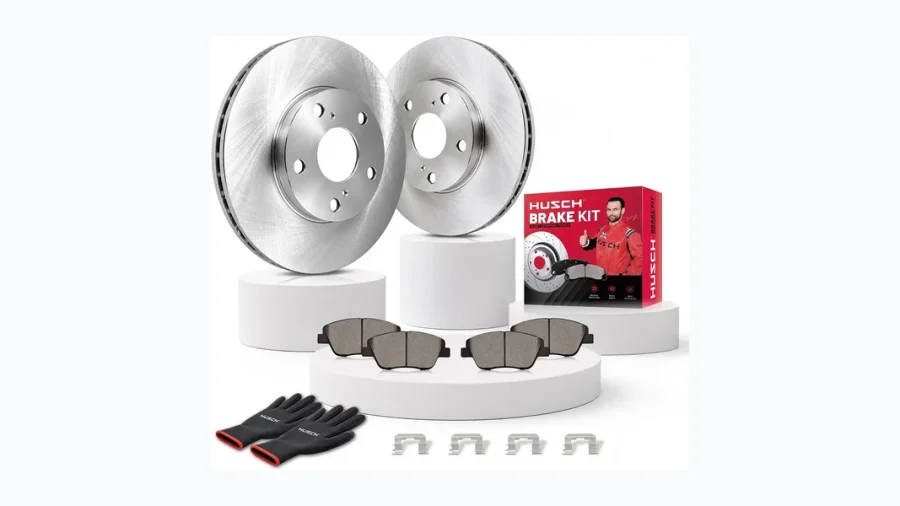
Why replace rotors when replacing brake pads? New pads work best against a flat, smooth rotor with enough material to absorb heat. Worn, warped, scored, or rusted rotors can reduce braking quality, cause noise, and wear new pads unevenly. Yet rotor replacement is not automatic. A rotor may be reused or resurfaced if it is in good condition and remains within the vehicle maker’s limits. The right decision comes from measuring rotor thickness, checking surface condition and runout, and comparing the results with the service specifications for your car.
📖 Table of Contents
📌 Key Takeaways
- Rotors do not always need replacement with brake pads, but they must be inspected and measured.
- Replace rotors that are too thin, cracked, badly scored, heavily rusted, or unable to meet runout limits.
- Resurfacing may be possible if enough rotor material will remain after machining.
- Service brakes on both sides of the same axle and follow the vehicle maker’s torque and wear specifications.
Why Replace Rotors When Replacing Brake Pads?
Brake pads slow the vehicle by pressing against the rotor. That contact creates friction and heat. For consistent braking, the pad needs to meet an even rotor surface.
Old rotors may have grooves, high spots, corrosion, or uneven material deposits. A new pad placed against that surface may not make full contact at first. It can also wear into the old rotor’s pattern rather than developing a smooth, even contact face.
Replacing worn rotors gives the pads a fresh surface. It may reduce the risk of vibration, noise, uneven wear, and a weak or inconsistent pedal feel. It also avoids paying for another brake service soon afterward if an old rotor fails inspection later.
Still, replacing every rotor as a matter of routine can waste usable parts. If a rotor is flat, smooth, free of damage, and thick enough to remain in service, reuse may be reasonable. The key is inspection, not assumption.
Rotors and pads wear as a system
Pads are designed to transfer a thin, even layer of friction material to the rotor during bedding. This layer helps the brakes work smoothly. Surface contamination or uneven deposits can disrupt that process and create changes in braking force as the rotor turns.
A fresh rotor makes bedding more predictable. A properly resurfaced rotor can do the same, provided it meets all dimensional limits and has the correct surface finish.
How to Tell Whether Your Rotors Need Replacement
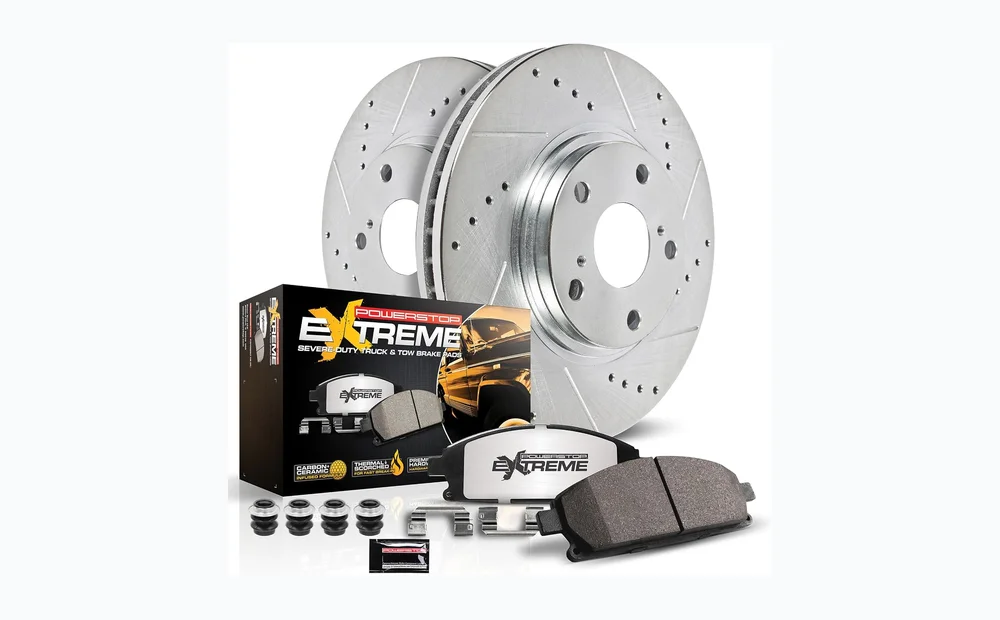
A quick look through the wheel is not enough to judge a rotor. Proper inspection may require removing the wheel and measuring the rotor with suitable tools. Exact limits differ by vehicle, so check current manufacturer service information.
Measure rotor thickness
Rotors become thinner as they wear. Most have a discard or minimum thickness specification marked on the rotor or listed in service data. A technician measures several points around the rotor with a micrometer, away from the outer rust lip.
If the rotor is at or below its discard limit, it must be replaced. If resurfacing would take it below the machining or service limit, it should not be machined.
Check thickness variation and runout
A rotor can have enough overall thickness yet still vary from one point to another. This variation can make braking force rise and fall as the wheel turns, which may feel like pedal pulsation.
Lateral runout describes side-to-side movement as the rotor rotates. It may come from the rotor, rust or debris on the hub, improper wheel fastener torque, or a hub-related issue. Replacing the rotor without finding the cause may allow the symptom to return.
Inspect the braking surfaces
Deep grooves, cracks, heavy pitting, blue heat marks, and severe rust are reasons for concern. Light surface marks may be acceptable, but the full condition and remaining thickness matter.
Also inspect the inner face. It can be much worse than the visible outer face, especially where road salt is common. A rusted or sticking caliper can leave one side of the rotor badly worn.
| Inspection finding | Likely decision | Important note |
|---|---|---|
| Below minimum thickness | Replace | A thin rotor cannot safely manage heat as designed. |
| Cracked or severely heat-damaged | Replace | Also inspect for a sticking caliper or another source of excess heat. |
| Deep scoring or heavy rust | Usually replace | Resurfacing is only an option if damage can be removed within service limits. |
| Runout or vibration | Diagnose first | Check the hub face, mounting, fastener torque, and suspension or hub condition. |
| Smooth surface and within all limits | Reuse may be possible | Follow the brake pad and vehicle maker’s service guidance. |
Replace, Resurface, or Reuse: Which Choice Is Best?
There are three practical options during a pad service. The best one depends on measurements, rotor design, surface condition, available equipment, and manufacturer guidance.
| Option | Strengths | Limitations | Best suited to |
|---|---|---|---|
| Replace | Provides a fresh surface and full usable thickness for that part | Uses more parts and may be unnecessary when existing rotors are serviceable | Thin, cracked, deeply scored, badly rusted, or heat-damaged rotors |
| Resurface | Can restore a flat, suitable finish while retaining the existing rotor | Removes material and requires correct machining equipment and limits | Sound rotors with enough material to remain above the required specification |
| Reuse as-is | Avoids replacing or machining a serviceable part | May lead to noise or uneven bedding if the surface is not suitable | Smooth, undamaged rotors that pass thickness, variation, and runout checks |
Who should choose what?
Choose replacement when the rotor fails any safety or service limit, or when surface damage cannot be corrected without making it too thin. Replacement is also the practical choice when corrosion has reduced the usable braking surface.
Choose resurfacing when the rotor is structurally sound and a qualified shop confirms that enough material will remain. Some vehicle makers discourage or restrict machining for certain applications, so verify the current procedure.
Choose reuse only after inspection and measurement. This may make sense for a relatively smooth rotor with even wear and no braking symptoms. Do not rely on mileage alone because driving conditions, climate, pad material, and brake operation all affect rotor wear.
Practical Steps for a Complete Brake Job
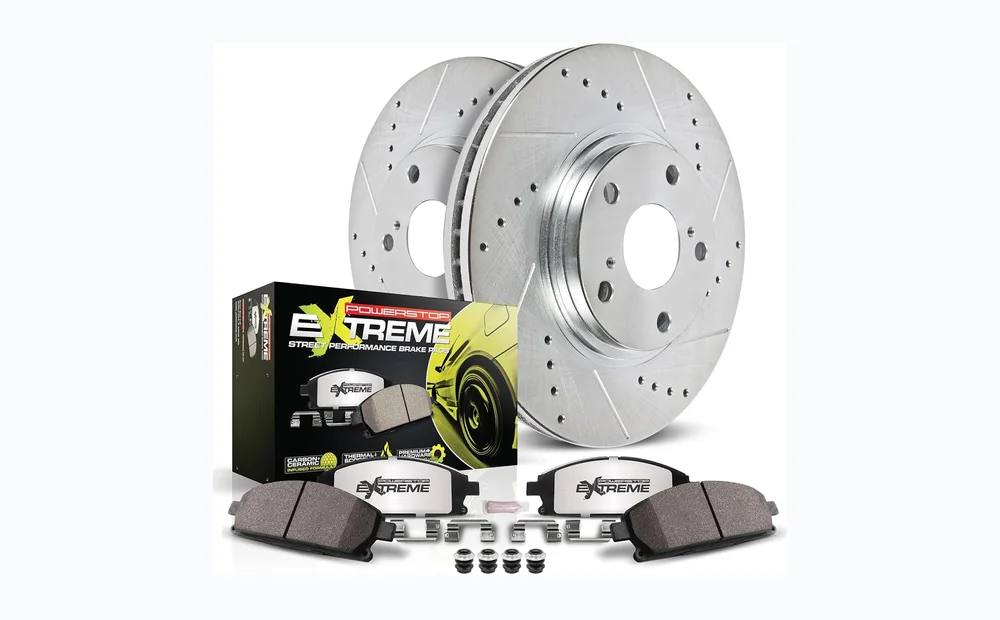
A good brake service covers more than pads and rotors. Uneven wear often points to another fault. Fitting new friction parts without fixing that fault can lead to the same problem again.
- Confirm the complaint. Note any grinding, squealing, pulling, vibration, warning lights, or soft pedal feel. Some symptoms can come from tires, wheel bearings, suspension parts, or hydraulic faults rather than rotors alone.
- Inspect both sides of the axle. Compare inner and outer pad wear. A large difference may indicate seized slide pins, a sticking piston, damaged hardware, or poor pad movement.
- Measure the rotors. Check thickness at several locations and test runout when needed. Compare all results with the correct vehicle specifications.
- Check the caliper and hardware. Inspect slide pins, boots, pad supports, hoses, and mounting parts. Replace damaged hardware where required and use only brake-safe lubricant at approved contact points.
- Prepare mounting surfaces. Rust or debris between the hub and rotor can cause runout. Clean the hub carefully and make sure the rotor sits flush.
- Install and torque correctly. Tighten caliper fasteners and wheel fasteners to the vehicle maker’s specifications. Uneven or excessive wheel torque can contribute to rotor problems.
- Bed the pads as directed. Follow the pad or vehicle maker’s bedding process. Avoid unnecessary hard stops until the parts have developed even contact, unless an emergency requires one.
Caution: Brake dust may contain harmful material. Do not blow it into the air with compressed air. Use suitable cleaning methods, secure the vehicle on rated supports, and never work under a car held only by a jack.
If you are not equipped to measure rotors or service the hydraulic system, use a qualified repair shop. Brakes are a safety-critical system, and guessing at wear limits is not worth the risk.
Problems After New Pads or Rotors
New parts do not rule out installation or vehicle faults. If a symptom starts after brake work, stop and inspect it rather than waiting for it to disappear.
| Symptom | Possible causes | Next step |
|---|---|---|
| Pedal pulsation | Runout, uneven deposits, dirty hub face, or loose or unevenly torqued fasteners | Measure runout and inspect rotor seating and hub condition. |
| Vehicle pulls while braking | Sticking caliper, restricted hose, contamination, tire issue, or uneven friction | Inspect both sides and diagnose before replacing more parts. |
| Grinding noise | Incorrect assembly, metal contact, debris, or a failed component | Stop driving when safe and inspect immediately. |
| Burning smell or one hot wheel | Dragging pad, seized caliper, parking brake fault, or restricted hose | Allow the brakes to cool and arrange prompt inspection. |
| Squeal | Vibration, improper bedding, glazed surfaces, worn hardware, or contamination | Verify installation, surface condition, hardware, and pad guidance. |
Frequently Asked Questions
Can I install new brake pads on old rotors?
Yes, if the rotors are smooth, undamaged, and within all thickness and runout limits. They should still be inspected on both faces. New pads may not perform well against heavily grooved, rusted, or uneven rotors.
Do rotors need to be replaced in pairs?
Rotors are generally serviced as a pair on the same axle to keep braking response consistent from side to side. Follow the vehicle maker’s repair instructions and never replace pads on only one side of an axle.
Does steering wheel vibration always mean warped front rotors?
No. Rotor runout or thickness variation can cause vibration, but wheel, tire, hub, and suspension problems may feel similar. Measurements are needed before blaming the rotors.
Can a rotor look good but still need replacement?
Yes. It may be too thin or have excessive variation even if its visible face looks smooth. The inner face may also have hidden rust or scoring.
How long should brake rotors last?
There is no single interval for every vehicle. Rotor life depends on driving style, vehicle load, climate, brake design, pad material, and mechanical condition. Inspection and measurement are more useful than mileage alone.
Make the Decision With Measurements
The reason to replace rotors with brake pads is to give the new pads a safe, even surface and prevent avoidable noise, vibration, and wear. But replacement is only necessary when inspection, measurements, or service guidance support it.
Before approving a brake job, ask for rotor thickness, surface condition, and runout findings for both sides of the axle. Compare them with the current manufacturer limits, then replace, resurface, or reuse the rotors based on evidence rather than habit.