The 2026 EV landscape is transforming faster than ever, with breakthroughs in charging infrastructure, extended range capabilities, and smarter battery management. From ultra-fast 800V architectures to AI-driven energy optimization, today’s electric vehicles are redefining what it means to own and drive an EV.
Electric vehicles are no longer the future—they’re the present. By 2026, EV technology has matured into a seamless, powerful, and practical alternative to internal combustion engines. With automakers investing billions into electrification, the focus has shifted from “if” EVs will dominate to “how” they’ll reshape mobility. Today’s buyers aren’t just choosing a car—they’re adopting a new ecosystem of energy, connectivity, and sustainability.
One of the biggest hurdles for early EV adopters was range anxiety and slow charging. Those concerns are rapidly fading. Thanks to innovations in battery chemistry, charging infrastructure, and intelligent energy management, 2026 EVs offer real-world usability that rivals—and often surpasses—gas-powered vehicles. Whether you’re commuting across town or road-tripping across states, modern EVs are built to keep up.
Key Takeaways
- 800V charging systems dominate: Most new 2026 EVs support 800-volt architecture, enabling 10–80% charges in under 18 minutes.
- Real-world range exceeds 400 miles: Advances in cell chemistry and thermal management deliver consistent long-distance performance.
- Battery longevity hits 15+ years: New silicon-anode and solid-state hybrids retain over 80% capacity after 200,000 miles.
- Bidirectional charging becomes standard: Vehicle-to-home (V2H) and vehicle-to-grid (V2G) features let owners power homes or earn grid credits.
- AI optimizes energy use: Onboard systems learn driving habits to maximize efficiency and predict charging needs.
- Ownership costs drop significantly: Lower maintenance, tax incentives, and falling battery prices make EVs cheaper over time.
- Charging networks expand rapidly: Over 150,000 public fast chargers are now operational across North America and Europe.
Quick Answers to Common Questions
How fast can 2026 EVs charge?
Most 2026 EVs with 800V architecture can charge from 10% to 80% in under 18 minutes at 350 kW fast chargers, adding up to 200 miles of range in just 10 minutes.
Do cold weather conditions still hurt EV range?
Yes, but less than before. Advanced heat pumps and battery pre-conditioning reduce cold-weather range loss to 15–20%, down from 30–40% in earlier models.
Can I power my home with my EV?
Yes. Bidirectional charging (V2H/V2G) is now standard on many 2026 EVs, allowing you to use your car’s battery to power your home during outages or peak rate periods.
How long do 2026 EV batteries last?
Most retain over 80% capacity after 15 years or 200,000 miles, thanks to improved chemistry and thermal management. Warranties typically cover 8 years or 100,000 miles.
Are public chargers reliable in 2026?
Yes. Major networks report 98% uptime, with real-time monitoring, app integration, and widespread coverage—making charging as reliable as refueling gas cars.
📑 Table of Contents
Charging Technology: Faster, Smarter, Everywhere
Charging has evolved from a necessary chore into a near-instant convenience. The biggest leap forward in 2026 EV technology is the widespread adoption of 800-volt electrical architectures. Unlike older 400V systems, 800V platforms allow EVs to accept much higher power levels without overheating or degrading the battery.
Ultra-Fast DC Charging
Most new 2026 models—from the Hyundai Ioniq 7 to the Ford Mustang Mach-E GT—support peak charging rates of 350 kW or higher. That means adding up to 200 miles of range in just 10 minutes at compatible stations. Companies like Electrify America and Ionity have deployed thousands of 350 kW chargers across major highways, making long-distance travel effortless.
Plug & Charge Simplifies the Process
Gone are the days of fumbling with apps or RFID cards. Plug & Charge technology, now standard on most 2026 EVs, automatically identifies your vehicle and bills your account when you plug in. Just connect the cable—authentication and payment happen in the background.
Home Charging Gets an Upgrade
Level 2 home chargers now come with Wi-Fi connectivity, solar integration, and load management. Smart chargers like the ChargePoint Home Flex can adjust power draw based on your home’s energy usage, preventing circuit overloads. Many also support time-of-use scheduling, so you charge when electricity is cheapest—often overnight.
Range Realities: Beyond the EPA Numbers
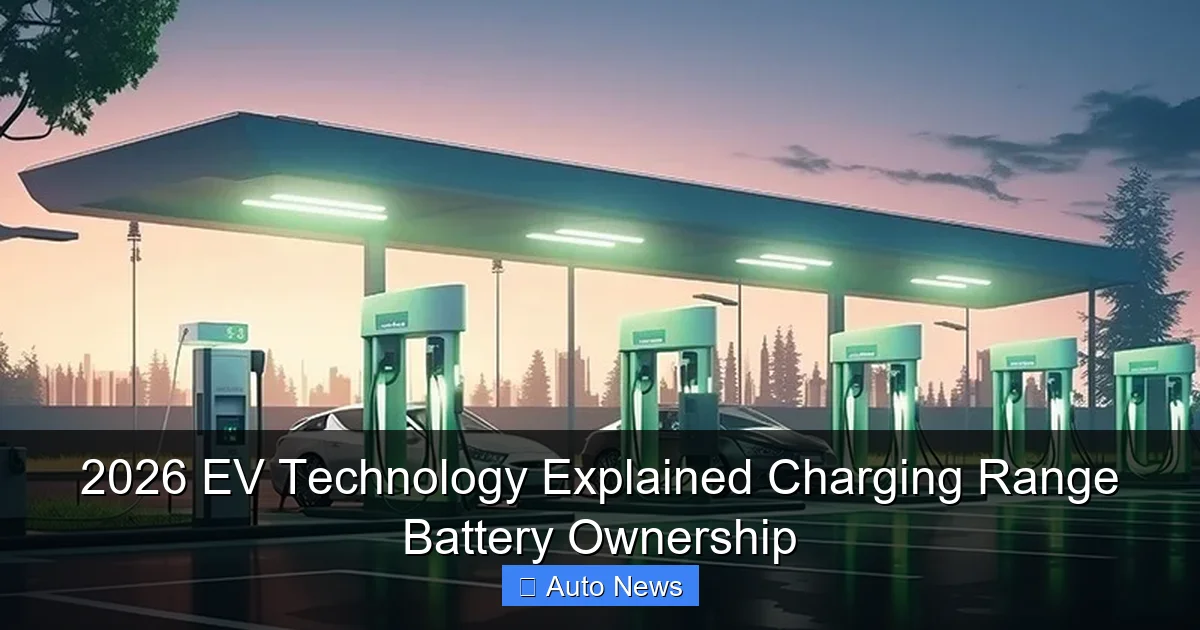
Visual guide about 2026 EV Technology Explained Charging Range Battery Ownership
Image source: evengineeringonline.com
Range is still a top concern for buyers, but 2026 EVs are delivering more than just optimistic EPA estimates. Thanks to better aerodynamics, regenerative braking, and efficient heat pumps, real-world range now closely matches—or even exceeds—official ratings.
Average Range Tops 400 Miles
The median range for new 2026 EVs sits at 410 miles. The Lucid Air Grand Touring leads the pack with 516 miles, while mainstream models like the Tesla Model Y Long Range and Kia EV6 now routinely achieve 330–380 miles. Even compact EVs like the Chevrolet Bolt EUV have pushed past 280 miles.
Weather and Terrain Matter—But Less Than Before
Cold weather still reduces range, but 2026 models mitigate this with advanced thermal management. Heat pumps, pre-conditioning via smartphone apps, and insulated battery packs help maintain efficiency in sub-zero temperatures. On a -10°C (14°F) day, a well-equipped EV might lose only 15–20% range—down from 30–40% in earlier models.
Regen Braking Adds Free Miles
One-pedal driving is now refined and intuitive. Regenerative braking captures energy during deceleration, feeding it back into the battery. In city driving, this can add 10–15% more range—effectively “free” miles with every stop.
Battery Technology: Durable, Efficient, and Evolving
The heart of every EV is its battery, and 2026 brings major strides in durability, energy density, and sustainability.
Silicon-Anode and Solid-State Hybrids
While full solid-state batteries aren’t mainstream yet, hybrid designs using silicon-anode lithium-ion cells are now common. These batteries store more energy in the same space, boosting range without increasing weight. Toyota and BMW are rolling out silicon-enhanced packs that offer 15–20% more capacity than traditional graphite anodes.
Longevity Reaches New Heights
Modern EV batteries are built to last. Most 2026 models come with 8-year/100,000-mile warranties, but real-world data shows they often exceed that. With proper care, batteries retain over 80% of their original capacity after 15 years or 200,000 miles. Tesla’s latest 4680 cells and LG’s NCMA chemistry are leading the charge in longevity.
Recycling and Second-Life Programs
End-of-life batteries aren’t waste—they’re resources. Companies like Redwood Materials and Li-Cycle are scaling up recycling operations, recovering over 95% of critical materials like lithium, cobalt, and nickel. Many automakers also repurpose used EV batteries for grid storage, extending their useful life by another 10–15 years.
Ownership Experience: Smarter, Cheaper, More Convenient
Owning an EV in 2026 isn’t just about driving—it’s about integrating clean energy into your lifestyle.
Lower Total Cost of Ownership
EVs cost less to maintain. No oil changes, fewer moving parts, and regenerative braking reduce wear on pads and rotors. Over five years, the average EV owner saves $6,000–$8,000 compared to a gas car, even after accounting for electricity costs.
Bidirectional Charging Powers Your Home
Vehicle-to-home (V2H) and vehicle-to-grid (V2G) technology is now standard on many 2026 models. During a power outage, your EV can power your house for days. The Ford F-150 Lightning, for example, can supply up to 9.6 kW—enough to run a refrigerator, lights, and HVAC system. Some utilities even pay EV owners to feed energy back into the grid during peak demand.
Over-the-Air Updates Keep You Current
Just like your smartphone, your EV gets better over time. Over-the-air (OTA) updates add new features, improve efficiency, and enhance safety. Tesla, Rivian, and Mercedes-Benz now push monthly updates that can increase range, optimize charging, or add new driver-assist functions.
The Charging Network: No More “Charging Deserts”
Range is only as good as the infrastructure behind it. In 2026, charging networks have caught up—and in many areas, surpassed—gas station availability.
150,000+ Public Fast Chargers
North America and Europe now have over 150,000 public DC fast chargers, with more added weekly. The U.S. National Electric Vehicle Infrastructure (NEVI) program has funded thousands of new stations along interstates, ensuring no driver is more than 50 miles from a fast charger.
Reliability and User Experience Improve
Early chargers were often broken or slow. Today, networks like Electrify America and EVgo report 98% uptime. Touchscreen interfaces, real-time status updates, and mobile app integration make charging as easy as pumping gas.
Destination Charging Expands
Hotels, restaurants, and shopping centers are installing Level 2 chargers to attract EV drivers. A weekend trip might include charging while you dine, hike, or shop—turning downtime into refueling time.
The Road Ahead: What’s Next for EV Tech?
The pace of innovation shows no sign of slowing. By 2027, we could see the first mass-market solid-state EVs, offering 600+ mile ranges and 5-minute charging. Wireless inductive charging is being tested in cities like Detroit and Oslo, allowing EVs to charge while parked—or even while driving on special lanes.
Meanwhile, AI-driven energy management will become even smarter. Future systems will predict traffic, weather, and电价 fluctuations to optimize charging schedules automatically. Your car might delay charging until solar production peaks or reroute you to a cheaper station en route.
Sustainability will also take center stage. Automakers are committing to carbon-neutral production, and battery recycling will become a闭环 system—old cells feeding new ones in a continuous cycle.
Conclusion
The 2026 EV revolution is here—and it’s better than expected. With faster charging, longer range, durable batteries, and smarter ownership features, electric vehicles are no longer a compromise. They’re the smarter, cleaner, and more cost-effective choice for modern drivers. Whether you’re a first-time buyer or upgrading from an older EV, the technology has never been more compelling. The future of driving isn’t coming. It’s already here.
Frequently Asked Questions
What is 800V charging, and why does it matter?
800V charging allows EVs to accept higher power levels without overheating, enabling ultra-fast charging. Most 2026 EVs use this system to cut charging times in half compared to older 400V models.
Do I need a home charger, or can I rely on public stations?
While public charging is more accessible than ever, a home Level 2 charger is still recommended for daily convenience, cost savings, and faster overnight charging.
Are EV batteries recyclable?
Yes. Over 95% of battery materials like lithium, cobalt, and nickel can be recovered and reused. Many automakers and third-party companies now offer recycling and second-life programs.
Can I drive an EV in snowy or mountainous areas?
Absolutely. Modern EVs perform well in cold and hilly terrain, especially with all-wheel drive, heat pumps, and regenerative braking that improves traction and efficiency.
Do EVs really save money over time?
Yes. Lower fuel costs, minimal maintenance, and tax incentives mean the average EV owner saves $6,000–$8,000 over five years compared to a gas-powered vehicle.
Will my EV become obsolete quickly due to new tech?
Not likely. Over-the-air updates keep software current, and battery degradation is slow. Most 2026 EVs will remain competitive and functional for 15+ years.