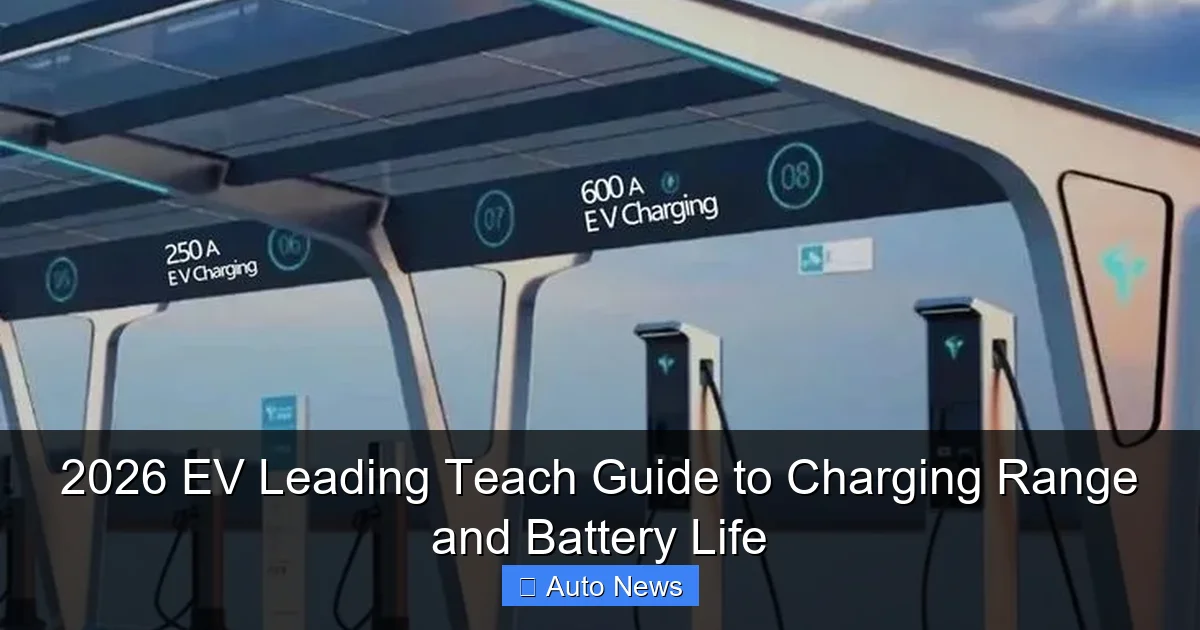
The 2026 EV Leading Teach guide delivers essential insights into charging range and battery life for modern electric vehicle owners. With real-world data and expert tips, this guide helps drivers optimize performance, reduce degradation, and embrace electrification with confidence.
Electric vehicles have moved from niche innovation to mainstream necessity. By 2026, over 40% of new car sales in the U.S. and Europe are expected to be fully electric, driven by tighter emissions regulations, falling battery costs, and consumer demand for cleaner, quieter transportation. As the EV market matures, drivers are no longer just asking “Can I make it to work and back?”—they’re asking smarter questions about range, charging, and long-term battery health. That’s where the 2026 EV Leading Teach guide comes in.
This comprehensive resource cuts through the noise to deliver practical, science-backed advice on maximizing your EV’s potential. Whether you’re a first-time EV buyer or upgrading from an older model, understanding how charging habits affect range and battery life is critical. With advancements in battery chemistry, charging infrastructure, and vehicle software, 2026 is a pivotal year for electric mobility. This guide equips you with the knowledge to drive farther, charge smarter, and keep your battery in peak condition for years to come.
Key Takeaways
- Charging speed depends on battery state and charger type: Most EVs in 2026 charge fastest between 10% and 80% state of charge using DC fast chargers.
- Battery longevity is tied to charging habits: Frequent fast charging and keeping batteries at 100% can accelerate degradation over time.
- Real-world range varies by climate and driving style: Cold weather can reduce range by up to 30%, while smooth driving improves efficiency.
- New thermal management systems enhance performance: 2026 models feature advanced cooling and heating to protect batteries in extreme temperatures.
- Bidirectional charging is becoming standard: Many new EVs support vehicle-to-home (V2H) and vehicle-to-grid (V2G) functions, adding utility beyond driving.
- Software updates improve range and efficiency: Over-the-air updates now optimize battery management and energy use without a dealership visit.
- Ownership costs continue to decline: Lower maintenance, tax incentives, and falling battery prices make EVs more accessible in 2026.
Quick Answers to Common Questions
What is the average EV range in 2026?
The average new EV in 2026 offers 300 to 400 miles of EPA-estimated range, with some premium models exceeding 500 miles.
Does fast charging damage EV batteries?
Frequent fast charging can contribute to slight degradation, but modern battery management systems minimize risk. Occasional use is safe and convenient.
How does cold weather affect EV range?
Cold weather can reduce range by up to 30% due to slower battery chemistry and increased cabin heating demand. Heat pumps help mitigate this.
Can I power my home with my EV in 2026?
Yes, many 2026 EVs support bidirectional charging, allowing them to power homes during outages using vehicle-to-home (V2H) technology.
Are EV maintenance costs lower than gas cars?
Yes, EVs have fewer moving parts, no oil changes, and reduced brake wear, saving owners $6,000–$10,000 over the vehicle’s lifetime.
📑 Table of Contents
Understanding EV Range in 2026
Range anxiety—the fear of running out of charge before reaching a destination—has long been a barrier to EV adoption. But in 2026, that fear is becoming outdated. The average new EV now offers 300 to 400 miles of EPA-estimated range, with premium models like the Tesla Model S Plaid and Lucid Air Grand Touring pushing past 500 miles. Even mainstream brands like Hyundai, Ford, and Volkswagen are delivering 250+ mile ranges across their lineups.
But EPA estimates don’t tell the whole story. Real-world range depends on several factors, including weather, terrain, speed, and cabin climate control. For example, driving at 75 mph on the highway can reduce range by 15–20% compared to city driving at 35 mph. Similarly, using the heater in winter or air conditioning in summer can drain the battery faster, especially in older models without efficient heat pumps.
How Climate Affects Range
Cold weather is the biggest range reducer. Lithium-ion batteries lose efficiency in low temperatures because chemical reactions slow down. In sub-freezing conditions, some EVs can lose up to 30% of their range. However, 2026 models are better equipped to handle this. Many now include heat pumps—devices that recycle waste heat from the motor and electronics to warm the cabin more efficiently than traditional resistive heaters. The Nissan Ariya and BMW iX, for instance, use heat pumps to cut winter energy use by up to 50%.
Preconditioning—warming or cooling the cabin while the car is still plugged in—also helps. By using grid power instead of battery power, you preserve range for driving. Most EVs now allow you to schedule preconditioning via smartphone apps, so your car is comfortable and efficient from the moment you start.
Charging Infrastructure and Speed in 2026
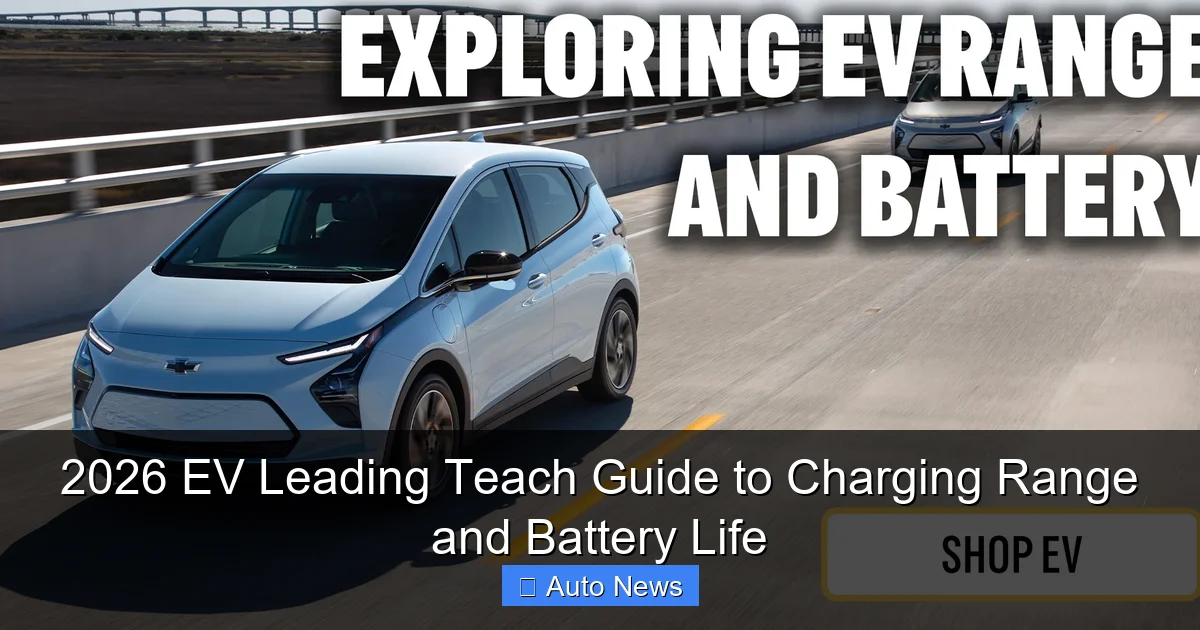
Visual guide about 2026 EV Leading Teach Guide to Charging Range and Battery Life
Image source: mooreschevrolet.com
Charging has come a long way since the early days of EVs. In 2026, the U.S. has over 150,000 public charging ports, with fast chargers (Level 3 DC) making up nearly 40% of the network. Tesla’s Supercharger network remains the gold standard, but non-Tesla drivers now have access through the North American Charging Standard (NACS), which most automakers have adopted.
Charging speed is measured in kilowatts (kW). A typical Level 2 home charger delivers 7–11 kW, adding about 25–35 miles of range per hour. DC fast chargers, on the other hand, can deliver 150–350 kW, adding 100–200 miles in 15–30 minutes. However, charging isn’t linear. Most EVs charge fastest between 10% and 80% state of charge (SoC). After 80%, the battery management system slows charging to protect the cells, a process called tapering.
Smart Charging and Load Management
New in 2026 is intelligent load management. Many EVs and home chargers now communicate with the electrical grid to optimize charging times. For example, your car might delay charging until off-peak hours when electricity is cheaper and greener. Some utilities even offer rebates for participating in demand-response programs.
Public chargers are also getting smarter. Networks like Electrify America and EVgo now use AI to predict congestion and suggest less-busy stations. Apps like PlugShare and A Better Routeplanner integrate real-time data on charger availability, speed, and pricing, making road trips easier than ever.
Battery Life and Degradation: What You Need to Know
Battery degradation is the gradual loss of capacity over time. Most EV batteries are designed to retain 70–80% of their original capacity after 8 years or 100,000 miles. But how you charge and drive can speed up or slow down this process.
One of the biggest myths is that fast charging ruins your battery. While frequent use of 350 kW chargers can contribute to wear, modern battery management systems (BMS) are highly sophisticated. They monitor temperature, voltage, and current in real time to prevent damage. In fact, studies show that drivers who primarily use fast chargers see only slightly faster degradation—about 1–2% more over five years—compared to those who charge slowly.
Best Practices for Battery Longevity
To maximize battery life, follow these guidelines:
– Avoid keeping your battery at 100% or below 10% for long periods. Most experts recommend charging to 80–90% for daily use.
– Use scheduled charging to finish just before you leave, reducing time spent at high charge levels.
– Limit fast charging to when you need it—like on road trips—rather than daily use.
– Park in the shade or garage in hot climates to reduce thermal stress.
Many 2026 EVs now include “battery health modes” that limit charge to 80% by default. The Ford Mustang Mach-E and Hyundai Ioniq 6 offer this feature, and it’s becoming standard across the industry.
Bidirectional Charging: Powering More Than Just Your Car
One of the most exciting developments in 2026 is the rise of bidirectional charging. This technology allows your EV to send power back to your home (V2H), the grid (V2G), or even another vehicle (V2V). It turns your car into a mobile energy storage unit.
For example, during a power outage, a Ford F-150 Lightning can power a home for up to three days using its 9.6 kW onboard inverter. Similarly, the Hyundai Ioniq 5 supports V2L (vehicle-to-load), letting you plug in appliances, tools, or even another EV directly from the car’s charge port.
The Future of Energy Independence
Bidirectional charging is more than a convenience—it’s a step toward energy resilience. In areas with frequent outages or high electricity costs, V2H can reduce reliance on the grid and lower utility bills. Some utilities are even piloting V2G programs that pay EV owners to feed power back during peak demand.
While not all 2026 EVs support bidirectional charging yet, the technology is rapidly expanding. Expect to see it become standard in most new models by 2027.
Software and Over-the-Air Updates
In 2026, your EV is more like a smartphone on wheels. Over-the-air (OTA) updates allow automakers to improve performance, efficiency, and features without a dealership visit. Tesla has led the way, but now brands like Rivian, Lucid, and even Toyota are rolling out regular updates.
These updates can enhance range and battery life. For example, a 2025 software update for the Polestar 2 improved energy efficiency by 5%, effectively adding 15 miles of range. Similarly, Hyundai released an update for the Ioniq 5 that optimized regenerative braking and thermal management, reducing battery wear in cold weather.
Personalization and Driver Coaching
Some EVs now include AI-driven coaching features. The Mercedes EQS, for instance, analyzes your driving habits and suggests ways to improve efficiency—like easing off the accelerator or using one-pedal driving. These tips can add 5–10% to your range over time.
Ownership Costs and Incentives in 2026
EV ownership is becoming more affordable. Battery prices have dropped to around $100 per kWh, down from over $1,000 in 2010. This has brought down vehicle prices and increased range across the board.
Federal and state incentives also help. The U.S. Inflation Reduction Act offers up to $7,500 in tax credits for qualifying EVs, with additional rebates in states like California and New York. Many utilities offer discounts on home chargers and reduced electricity rates for EV owners.
Maintenance costs are significantly lower too. EVs have no oil changes, fewer moving parts, and regenerative braking that reduces wear on brake pads. Over the life of the vehicle, owners can save $6,000–$10,000 compared to gas-powered cars.
Conclusion
The 2026 EV Leading Teach guide shows that electric vehicles are no longer just environmentally friendly—they’re smarter, more capable, and more practical than ever. With real-world range exceeding 300 miles, fast-charging networks expanding daily, and battery technology improving rapidly, the future of driving is electric.
By understanding how charging habits affect range and battery life, drivers can get the most out of their EVs. From preconditioning in winter to using bidirectional charging at home, small choices add up to big savings and better performance. As software updates and AI coaching become standard, owning an EV in 2026 is not just convenient—it’s empowering.
Whether you’re charging at home, on a road trip, or powering your house during an outage, the EV revolution is here. And with the right knowledge, you can lead the charge.
Frequently Asked Questions
How long does it take to charge an EV at home?
A Level 2 home charger typically adds 25–35 miles of range per hour. A full charge from 10% to 80% takes about 6–8 hours for most 2026 models.
Should I charge my EV to 100% every day?
No. Charging to 80–90% is better for battery health. Reserve 100% charges for long trips when maximum range is needed.
What is regenerative braking?
Regenerative braking captures energy when you slow down and feeds it back to the battery, improving efficiency and reducing brake wear.
Can I install a home charger myself?
Most home chargers require professional installation to meet electrical codes and ensure safety. Many utilities offer rebates for certified installers.
Do EVs lose range over time?
Yes, but slowly. Most EV batteries retain 70–80% of their capacity after 8 years or 100,000 miles, depending on usage and climate.
Are there enough public chargers in 2026?
Yes. The U.S. has over 150,000 public charging ports in 2026, with fast chargers widely available along major highways and in urban areas.