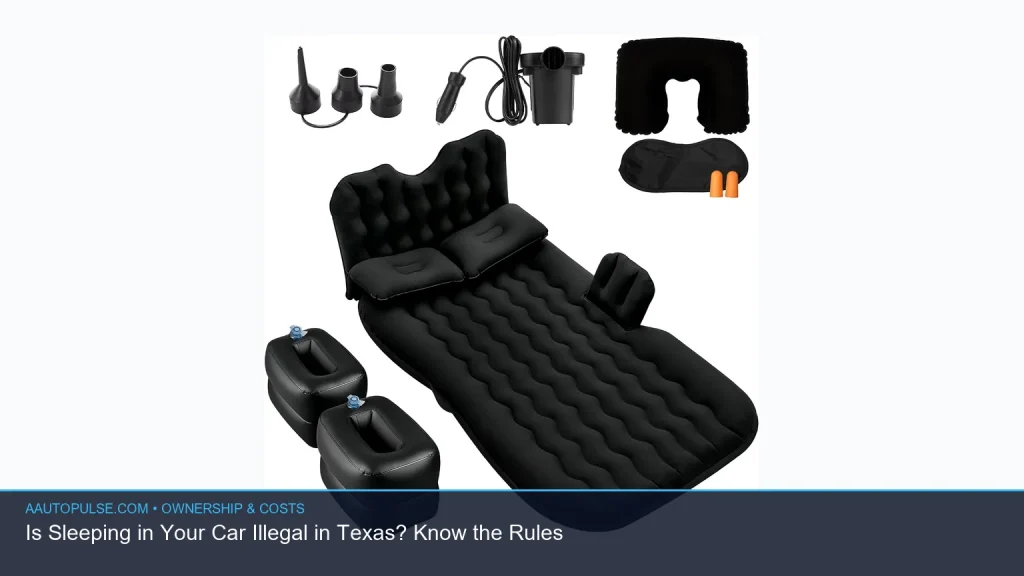
If you’re wondering is sleeping in your car illegal in Texas, the short answer is: not always. Texas does not have one simple statewide law that bans car sleeping everywhere, but where you park, how long you stay, and whether you’re causing a safety or property issue can change the answer fast. Some places allow short rest breaks, while others can ticket, tow, or ask you to move. This guide explains the rules, the risks, and the safest way to handle an overnight stop in Texas.
📖 Table of Contents
- What Texas law really says about sleeping in your car
- Common places where car sleeping can cause trouble
- How to tell whether you can sleep in your car legally
- When sleeping in your car can lead to a ticket, tow, or arrest
- Safe and practical ways to rest without creating legal problems
- How Texas local rules can change the answer
- Frequently asked questions
- Conclusion: know the location, know the risk
📌 Key Takeaways
- Sleeping in your car in Texas is not automatically illegal, but local rules, property rules, and safety laws can make it a problem.
- Public parking, highway shoulders, private lots, and city ordinances are treated differently, so location matters more than the act itself.
- You may face towing, trespassing issues, or a citation if you park where overnight stays are restricted or you ignore a property owner’s rules.
- If you must rest, choose a legal, well-lit, low-risk location and avoid anything that looks like camping, trespassing, or impaired driving.
What Texas law really says about sleeping in your car
Texas law does not create one blanket statewide ban that says you can never sleep in your car. In practice, the issue is usually about where the vehicle is parked and whether the stop violates traffic, parking, trespassing, or local rules. A driver who pulls off to rest may be treated very differently from someone who parks overnight in a lot with posted restrictions.
That means the legal answer is often “it depends.” If you are on public land, a city street, private property, or a restricted roadside area, different rules can apply. When in doubt, the safest move is to check local signs, local ordinances, and the property owner’s rules before settling in for the night.
Why intent matters
Law enforcement and property owners often look at more than just the fact that someone is asleep in a vehicle. They may consider whether the car is parked legally, whether you are blocking traffic, whether the area is posted against overnight parking, and whether there are signs of trespassing or public safety risk. Even a short rest can become a problem if the stop is in the wrong place.
Common places where car sleeping can cause trouble

Most legal problems come from the location, not the sleeping itself. A safe stop in one place can be completely fine, while a few miles away it could lead to a citation or a tow. Here are the most common areas where Texas drivers run into trouble.
Private property
If you park on private property, the owner or manager can usually decide whether overnight parking is allowed. That includes shopping centers, business lots, apartment complexes, and many gas stations. If the property is posted or someone tells you to leave, staying put can turn into trespassing.
Public streets and city parking
City parking rules vary widely. Some towns allow overnight parking on certain streets, while others restrict it through local ordinances or posted signs. Always look for time limits, permit rules, street-cleaning schedules, and “no overnight parking” notices before you park.
Highway shoulders and rest areas
Highway shoulders are not safe places to sleep and may be restricted for emergency use only. Rest areas are better for a short break, but they can still have posted time limits or rules against camping behavior. If a location is designed for brief rest, keep your stop brief and avoid setting up anything that looks like a campsite.
Parking lots that appear open but are not
Some drivers assume a lot is fair game because it is empty or not fenced in. That can be a costly mistake. Business owners, security staff, or police may treat an overnight stay as unauthorized use of private property, even if the lot seems unused.
How to tell whether you can sleep in your car legally
If you are trying to decide whether a stop is safe and lawful, use a simple checklist. The goal is to reduce the chance of trespassing, towing, or a safety citation. The more public, permitted, and clearly posted as allowed, the better your odds.
- Check for posted signs. Look for “no overnight parking,” time limits, permit requirements, towing warnings, or business-only spaces.
- Confirm who owns the space. Public street, private lot, city property, and rest area rules are not the same.
- Make sure you are fully out of traffic lanes. Never block driveways, fire lanes, loading zones, handicap spaces, or emergency access areas.
- Keep the stop low-profile. Avoid loud music, chairs outside the car, cooking, or behavior that looks like camping.
- Plan for a short rest, not a long stay. The longer you remain, the more likely someone will notice and question it.
Decision table: safe stop or legal risk?
| Situation | Risk Level | Why |
|---|---|---|
| Well-posted rest area with short rest only | Lower | Usually intended for breaks, but time limits may apply |
| Private lot with no overnight signs and no permission | Higher | Can be treated as trespassing or unauthorized parking |
| Street parking in a city with overnight restrictions | Higher | Local ordinances may limit how long you can stay |
| Shoulder of a highway or ramp | Very high | Safety hazard and often not allowed for sleeping |
When sleeping in your car can lead to a ticket, tow, or arrest

Even when car sleeping is not directly banned, other issues can create legal trouble. The most common ones are trespassing, parking violations, blocking access, or being in an unsafe area. A citation may seem minor, but towing fees and storage charges can make the real cost much higher.
Police may also respond if your vehicle appears abandoned, disabled, or suspicious. If you are asleep in a running car, intoxicated, or parked somewhere unsafe, the situation can escalate quickly. The details matter, and the same parking spot can be treated differently depending on what is happening around the vehicle.
Special caution if alcohol is involved
If you have been drinking, sleeping in your car can be legally risky even if you do not plan to drive. Texas has strict laws around intoxication and vehicle control, and an officer may question whether you had actual control of the vehicle. If alcohol is involved, do not assume that “I was just sleeping” will protect you.
Safe and practical ways to rest without creating legal problems
If you need to stop and sleep, the goal is to do it in a way that is calm, legal, and low-risk. Short rest can help reduce drowsy driving, but you should choose your location carefully. A little planning can help you avoid a ticket or a dangerous situation.
- Pick a legitimate stop. Use a rest area, truck stop, or another location that clearly allows temporary parking when possible.
- Read every sign. Signs control the rules more than assumptions do.
- Park fully and legally. Stay within marked spaces and away from restricted zones.
- Keep the car discreet. Turn off bright interior lights, keep noise down, and avoid opening doors repeatedly.
- Do not create a camp setup. Chairs, grills, awnings, and gear can make a short rest look like unauthorized camping.
- Have a backup plan. Know where you will go if a manager, officer, or security guard asks you to move.
Good signs you are making a safer choice
You are more likely to avoid trouble if the area is well lit, legal for parking, not posted against overnight stays, and not in a position where you block traffic or private access. If the location feels uncertain, that is usually a sign to move on. A few extra minutes of driving can save you a much bigger headache later.
How Texas local rules can change the answer
Because Texas is large, local rules can vary a lot from one city or county to the next. One municipality may allow certain types of overnight parking, while another may restrict it near residential areas, downtown districts, or public facilities. That is why a general internet answer is never enough for every situation.
If you expect to sleep in your car for more than a one-time emergency stop, check the specific city code, county rules, or property policy first. For the most accurate answer, verify current rules with the local government or property owner, since regulations can change. This is especially important if you travel through multiple Texas cities in one trip.
Frequently asked questions
Can I sleep in my car at a Texas rest area?
Sometimes, but only if the posted rules allow it. Rest areas are often meant for short breaks, not long-term parking or camping. Always check the signs and leave if there is a posted time limit or restriction.
Is it illegal to sleep in my car in a Walmart parking lot in Texas?
It depends on the location and the store’s policy. Some private lots may allow it, while others do not. Ask store management first, because permission is what matters most on private property.
Can police wake me up and tell me to move?
Yes, if you are parked in a restricted, unsafe, or unauthorized place. Officers may also act if your car is blocking traffic or if the area has local restrictions. If asked to move, do so calmly and safely.
Does sleeping in my car count as camping?
It can, depending on what you do around the car. Sleeping alone is different from setting up chairs, cooking, or staying for an extended time. The more your activity looks like camping, the more likely it is to violate local rules.
What should I do if I’m too tired to keep driving?
Pull over somewhere legal and safe as soon as possible. Drowsy driving is dangerous, and a brief rest is better than pushing through fatigue. If you are unsure about a location, move to a clearly permitted stop instead.
Conclusion: know the location, know the risk
So, is sleeping in your car illegal in Texas? Not by default, but it can become illegal or costly depending on where you park and what the local rules say. The safest approach is to use legal parking, read the signs, respect private property, and avoid anything that looks like camping or trespassing. If you need to rest, choose a place that clearly allows it and keep your stop simple. When the rules are unclear, verify them before you settle in.