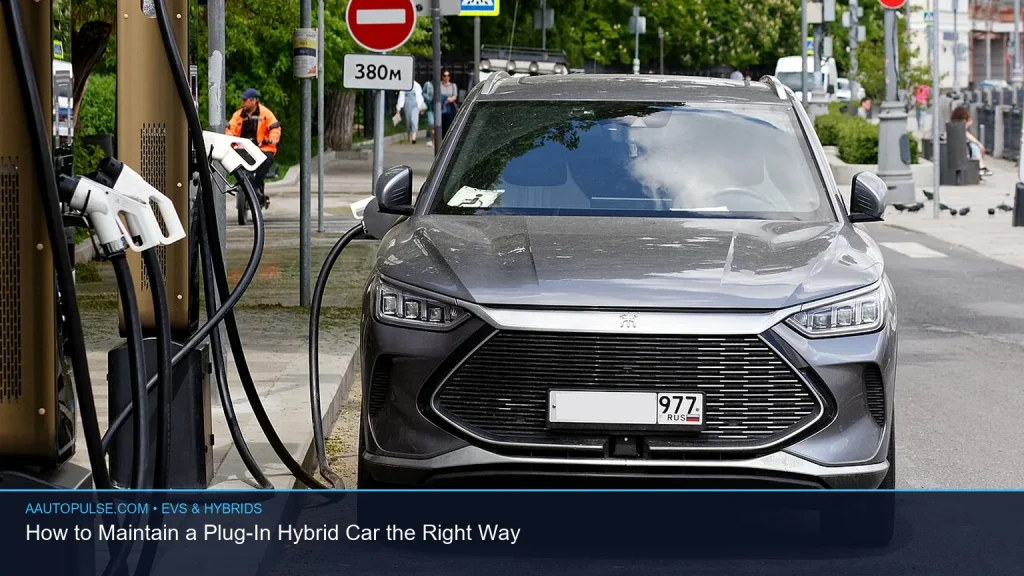
If you want to know how to maintain a plug-in hybrid car, the short answer is: treat it like both an EV and a gas car. That means charging it often, keeping up with oil changes and fluid checks, protecting the battery, and not ignoring warning lights or odd drivability issues. Plug-in hybrids are usually reliable when maintained on schedule, but they do need a slightly different routine than either pure gas or fully electric vehicles. This guide explains what to do, what to watch for, and when to check your owner’s manual for model-specific intervals.
📖 Table of Contents
- What Makes Plug-In Hybrid Maintenance Different?
- How to Maintain a Plug-In Hybrid Car: The Core Routine
- Battery Care Habits That Help Long-Term Health
- Maintenance Items You Should Not Skip
- Troubleshooting Common Plug-In Hybrid Symptoms
- Driving and Storage Habits That Reduce Wear
- Owner’s Manual First: The Best Source for Your Model
- FAQ
- Conclusion
📌 Key Takeaways
- Plug-in hybrids need both EV-style care and regular gas-engine maintenance.
- Battery health improves with moderate charging habits, gentle driving, and avoiding extreme heat or long storage at very low charge.
- Oil, coolant, brake fluid, tires, and brakes still matter, even if you drive mostly on electricity.
- Your owner’s manual is the final word for service intervals, fluid types, and battery care steps.
What Makes Plug-In Hybrid Maintenance Different?
A plug-in hybrid car has two systems working together: an electric drive system and a gasoline engine. That means you are maintaining high-voltage components, a traction battery, a conventional engine, and the parts that connect them. The result is often lower wear on brakes and engine parts, but not zero maintenance.
Many drivers assume that because a plug-in hybrid uses less gas, it needs far less service. In reality, some tasks happen less often, while others still need attention on a normal schedule. The best approach is to follow the maintenance minder, then confirm the details in the owner’s manual.
Think in two layers
For a plug-in hybrid, there is the electric side and the gas side. The electric side includes the battery, charging port, inverter, and electric motor. The gas side includes engine oil, filters, spark plugs, belts or chains, and exhaust-related parts. Both need care to keep the vehicle efficient and dependable.
How to Maintain a Plug-In Hybrid Car: The Core Routine
The best maintenance plan is simple, regular, and consistent. If you are learning how to maintain a plug-in hybrid car, start with these basics and build from there. Most of the time, small habits prevent larger repair bills later.
-
Charge it regularly, but avoid extremes.
Plug in often enough to keep the battery in a healthy range. For daily driving, many owners aim to stay somewhere between low and moderate state of charge rather than sitting at empty for long periods. If your vehicle has charge limits or scheduled charging settings, use them.
-
Drive the gas engine enough to keep it healthy.
Some plug-in hybrids will start the engine even when you are mostly driving electric. That is normal. If you rarely use the engine, make sure the vehicle completes enough gasoline operation for oil circulation and fuel freshness, especially in models that recommend periodic engine run time.
-
Follow oil-change intervals, even with low gas use.
Many plug-in hybrids still need oil changes based on time and mileage. A common interval for modern cars may be around 7,500 to 10,000 miles or 6 to 12 months, but this varies by model and engine design. Always verify the exact schedule in your owner’s manual or maintenance reminder system.
-
Check coolant and brake fluid on schedule.
Hybrid systems often have separate coolant circuits for the engine, battery, power electronics, or inverter. Brake fluid usually needs periodic replacement every few years, even if the brakes last longer than on a gas-only car. Low fluid or dirty fluid can affect safety and performance.
-
Rotate and inspect tires regularly.
Plug-in hybrids are often heavier than similar gas cars because of the battery pack. That extra weight can increase tire wear. Tire rotations are commonly done every 5,000 to 7,500 miles, but the correct interval depends on the vehicle and tire type.
Battery Care Habits That Help Long-Term Health
The traction battery is one of the most important parts of a plug-in hybrid, so smart battery care matters. You do not need to treat it with fear, but you should avoid habits that add unnecessary stress. A few easy choices can help preserve range and performance over time.
Best battery habits
- Use regular charging instead of letting the battery sit empty for long periods.
- Avoid repeatedly leaving the car parked at very high charge in extreme heat unless the manual says it is fine.
- Use scheduled charging if it helps finish charging closer to departure time.
- Park in shade or a garage when possible during hot weather.
- Keep software updates current if the manufacturer offers battery or charging updates.
Cold weather can also reduce electric range, while hot weather can increase battery stress. That does not mean you should avoid driving in seasonal extremes. It just means you should expect some range change and rely on the vehicle’s built-in thermal management when available.
Maintenance Items You Should Not Skip

Because plug-in hybrids can run electric for many short trips, it is easy to overlook routine service. That can lead to problems that are unrelated to the battery. A vehicle that seems low-maintenance on the surface still needs a full inspection schedule.
| Maintenance item | Typical interval range | Why it matters |
|---|---|---|
| Oil and filter | About 6 to 12 months or 7,500 to 10,000 miles, depending on the vehicle | Protects the engine, even if it runs less often |
| Tire rotation | About every 5,000 to 7,500 miles | Helps prevent uneven wear on a heavier vehicle |
| Brake fluid | Often every 2 to 3 years | Supports safe braking and system reliability |
| Coolant | Commonly every several years or by mileage, depending on formulation | Protects engine and hybrid electronics from overheating |
| Cabin air filter | Often yearly or every 15,000 to 30,000 miles | Keeps airflow clean and strong |
These are general ranges, not universal rules. Some vehicles use long-life fluids, while others have stricter schedules. If your model has a maintenance minder, use it, but still review the manual for time-based items that may appear less often than mileage-based items.
Troubleshooting Common Plug-In Hybrid Symptoms
Small warning signs can point to service needs before a bigger issue develops. If you notice a change in how the vehicle drives, charges, or starts, do not dismiss it. Use the checklist below to help narrow down the cause.
| Symptom | Possible causes | What to do next |
|---|---|---|
| Reduced electric range | Weather, tire pressure, battery age, heavy driving, or software behavior | Check tire pressure, recent driving patterns, and any battery warnings |
| Engine starts more often than usual | Cold weather, defrost use, maintenance needs, or system logic | Review manual guidance and scan for alerts if it seems abnormal |
| Slow charging | Charging equipment, outlet issues, temperature limits, or onboard charger behavior | Inspect the charger, try another known-good setup, and check for fault lights |
| Brake feel changes | Brake wear, fluid issues, or regeneration-related blending | Have the brakes inspected promptly |
If a warning light appears, especially one related to the hybrid system, battery, brakes, or charging, do not wait. Some issues can be minor, but hybrid systems can enter reduced-power mode to protect themselves. A quick diagnosis can prevent larger repairs.
Driving and Storage Habits That Reduce Wear
How you use a plug-in hybrid matters almost as much as how you service it. Smooth acceleration, steady braking, and regular use all help. Short trips are fine, but they should not be the only thing the car ever sees.
Everyday habits worth keeping
- Accelerate smoothly instead of flooring the pedal often.
- Use regenerative braking naturally, but still service the friction brakes.
- Check tire pressure monthly or before long trips.
- Do not leave the vehicle parked for months with a depleted battery.
- If storing the vehicle, follow the manufacturer’s battery storage guidance.
If you live where winter road salt is common, wash the underside periodically. Corrosion still affects suspension, brake lines, and fasteners on plug-in hybrids just as it does on other cars. A cleaner vehicle often ages better overall.
Owner’s Manual First: The Best Source for Your Model
There is no single maintenance schedule that fits every plug-in hybrid. A compact plug-in hybrid, a midsize SUV, and a luxury model may all use different fluids, battery cooling systems, and service intervals. That is why the owner’s manual matters more than general advice.
Use the manual to confirm the right oil grade, coolant type, battery care instructions, tire rotation pattern, and service intervals. If the vehicle has a maintenance app or dashboard reminder, it can help, but it should not replace the manual. When the two differ, the manual should guide the decision.
FAQ
Do plug-in hybrids need oil changes if I mostly drive on electricity?
Yes. Even if the engine runs less often, the oil still ages over time and the engine still needs protection. Many manufacturers base oil service on time as well as mileage. Check your owner’s manual for the exact interval.
Should I charge my plug-in hybrid every night?
Often, yes, if that fits your driving needs and your vehicle is designed for regular charging. Daily charging helps maximize electric miles and can reduce fuel use. If your model has charge-limit settings or scheduled charging features, use them as directed by the manual.
Do plug-in hybrids need brake service less often?
Sometimes the brake pads last longer because regenerative braking does part of the work. Still, the system needs regular inspections, and brake fluid still needs periodic replacement. Less pad wear does not mean no brake maintenance.
What is the best way to protect the battery in hot weather?
Avoid leaving the vehicle in extreme heat at very low or very high charge for long periods when possible. Park in shade or a garage, charge on a smart schedule if available, and let the car’s thermal management do its job. The manual may also give model-specific storage advice.
Can I use the same maintenance rules as a regular hybrid?
Not always. A plug-in hybrid has a larger battery and a charging system, so it may have different service items and intervals. Some maintenance overlaps with regular hybrids, but you should follow the plug-in hybrid schedule for your specific model.
Conclusion
Learning how to maintain a plug-in hybrid car is mostly about balance. Keep the battery healthy, service the gas engine on time, inspect brakes and tires, and pay attention to warning signs early. If you want the safest and most cost-effective routine, start with your owner’s manual, then build a simple habit of regular charging, regular inspections, and timely service. That approach gives a plug-in hybrid the best chance to stay efficient, reliable, and ready for daily driving.